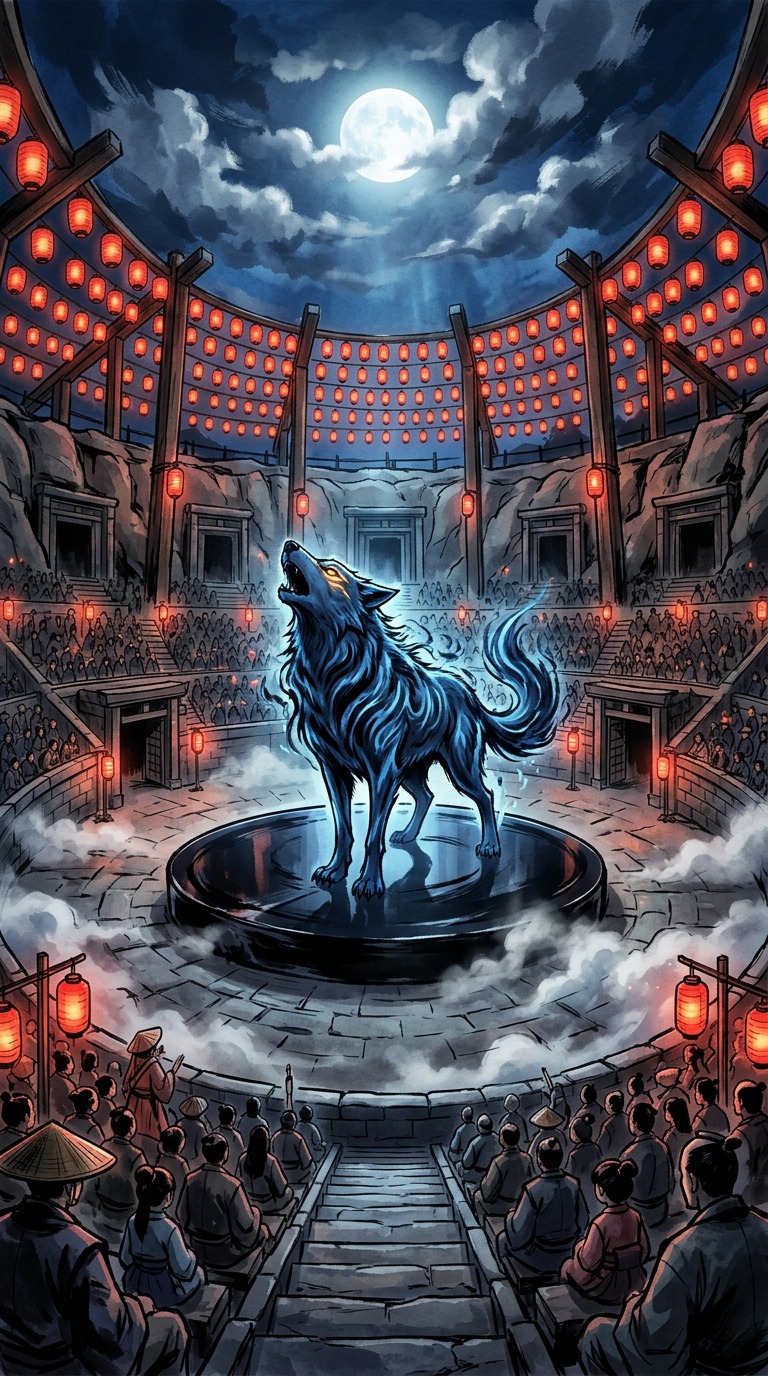
The strongest person in any room is the one who arrived already knowing how it ends.
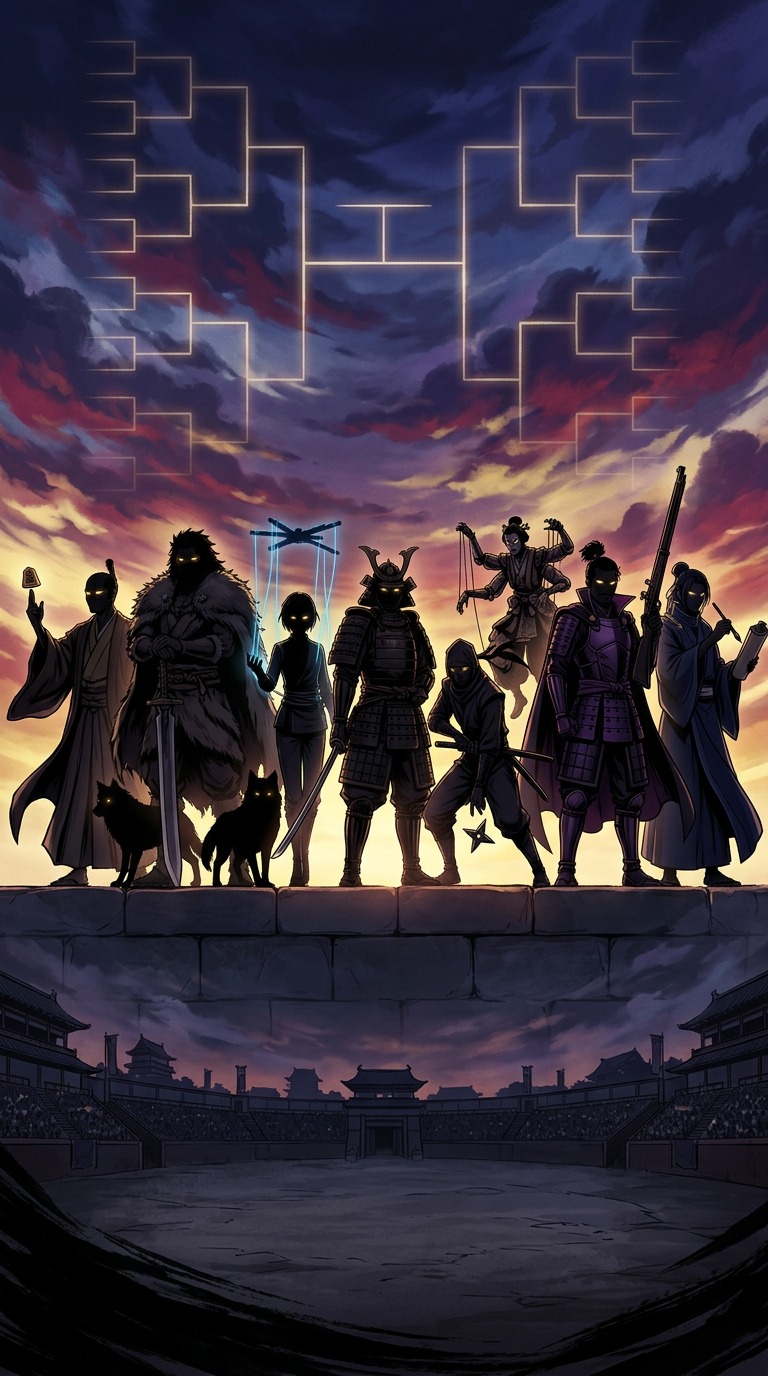
Tonight, sixteen of them walked in.
Only eight walked in knowing.
The bracket is architecture. Sixteen fighters. Four rounds. One champion. Single elimination — meaning every loss is permanent, every exit is final, every name that leaves the bracket leaves it completely, taking with it whatever they carried into the arena. The format has not changed in three hundred years, because the man who designed it — the Great Shogun himself, before he disappeared into whatever it is Shoguns disappear into — believed that simplicity was the only fairness. You cannot argue with a bracket. You can only fight your way through it or stop fighting. And stopping, as fighters learn at registration, is not actually an option once you have begun.
The obsidian platform at the center of the arena was not quarried. It was not shaped by human tools or placed by human hands. It was already here when the builders arrived, and the historians will tell you — if you can find a historian willing to speak plainly about this particular subject — that this stone is what remains of the original bargaining ground: the specific patch of earth where the Great Shogun made his deal three centuries ago. No one agrees on who the other party to that deal was. The platform, when cleaned, still bears the marks of that negotiation — not carvings, nothing so deliberate. More like the stone remembers. The stone absorbed the weight of something enormous and has not fully released it. Fighters who stand at the platform's center during the silence before a match have reported hearing, very faintly, the sound of a voice they cannot quite make out. The tournament committee does not comment on this. They do note that the obsidian has never once cracked, regardless of what has been done to it, and they consider this relevant.
You cannot leave once you have entered. This is not a rule so much as a physical reality. The moment registration closes — the precise moment, not the approximate moment, the judges know when — a spirit-binding seals the bracket. It does not announce itself. There is no ceremony, no visible change in the air. Fighters simply find, if they attempt to withdraw, that their body no longer cooperates with that intention. The spiritual pressure begins in the sternum: a compression, like a fist closing around the lungs from the inside. Three fighters in the tournament's history have attempted to leave after the binding sealed. All three were found unconscious before they cleared the outer walls, crumpled at the tournament gates like men who had walked into an invisible cliff face. They were carried back to the competitors' quarters. They competed. Two of them lost in the first round and seemed, afterward, almost relieved. The third reached the semifinals. He refuses to discuss any of it. The spirit-binding does not harm the fighters. The committee is very clear about this. It simply enforces what the fighters already agreed to when they wrote their names.
The judges are seven in number — one elder from each of the seven represented clans, each one reading the match through a different lens. An elder of the Samurai Masters watches form and discipline, looking for the point where training becomes second nature and second nature becomes a kind of mortality in itself. An elder of the Zen Circle watches intention, searching for the gap between what a fighter does and what a fighter means. The Drowned Shinobi elder watches for honesty — shinobi believe that every technique eventually tells the truth about its user, and the elder's role is to hear that truth first. The others watch for things that don't have precise names but that seven centuries of tournament history have established as visible to the right eyes. Critically: the judges may rule a match by "defeat of will" — a fighter who has stopped fighting in spirit before the body has been physically defeated can be ruled finished. This has been invoked eleven times in tournament history. Every single time, the fighter ruled against has later, sometimes years later, confirmed that the judges were right.
What is being competed for is land, and voice, and legacy — in that order of scale. Three of the nine clan territories currently carry ownership disputes formally deferred to the tournament outcome: the border marshes between the Hana-za and the Drowned Shinobi, the mountain passes that the Samurai Masters and the Zen Circle have been quietly contesting for thirty years, and the sea-approach corridor that two clans have claimed simultaneously without resolving who claimed it first. Beyond territory: the champion of the full bracket earns the right to speak at the next Shogun Council — a genuine speaking slot, requiring all nine clans to sit and listen. No individual fighter has held this right in a hundred years. The last one who did stopped three wars that had not yet started by simply describing what he saw coming.
The weight of what the tournament produces is not in the matches themselves. The weight is in the after. Four champions have emerged from previous tournaments. The first became a war-leader and spent thirty years intercepting conflicts before they became conflicts. The second disappeared — was present at the Council, spoke his piece, returned to his quarters, and was not in them the following morning. His belongings were still there. He was not. The third champion refused the Council seat and went home, and the village she returned to became known, within a generation, as a place where disputes were simply settled somehow, without bloodshed. The fourth is the reason one of the nine territories changed hands twenty years ago — a matter so politically combustible that even naming it in the wrong company still causes silences in rooms. The platform remembers, though. Whatever was bargained for, all those years ago, the stone is still collecting interest.
Three hundred years ago, the Great Shogun stood at the center of these nine territories and wrote his name in something darker than ink. The ground never forgot.
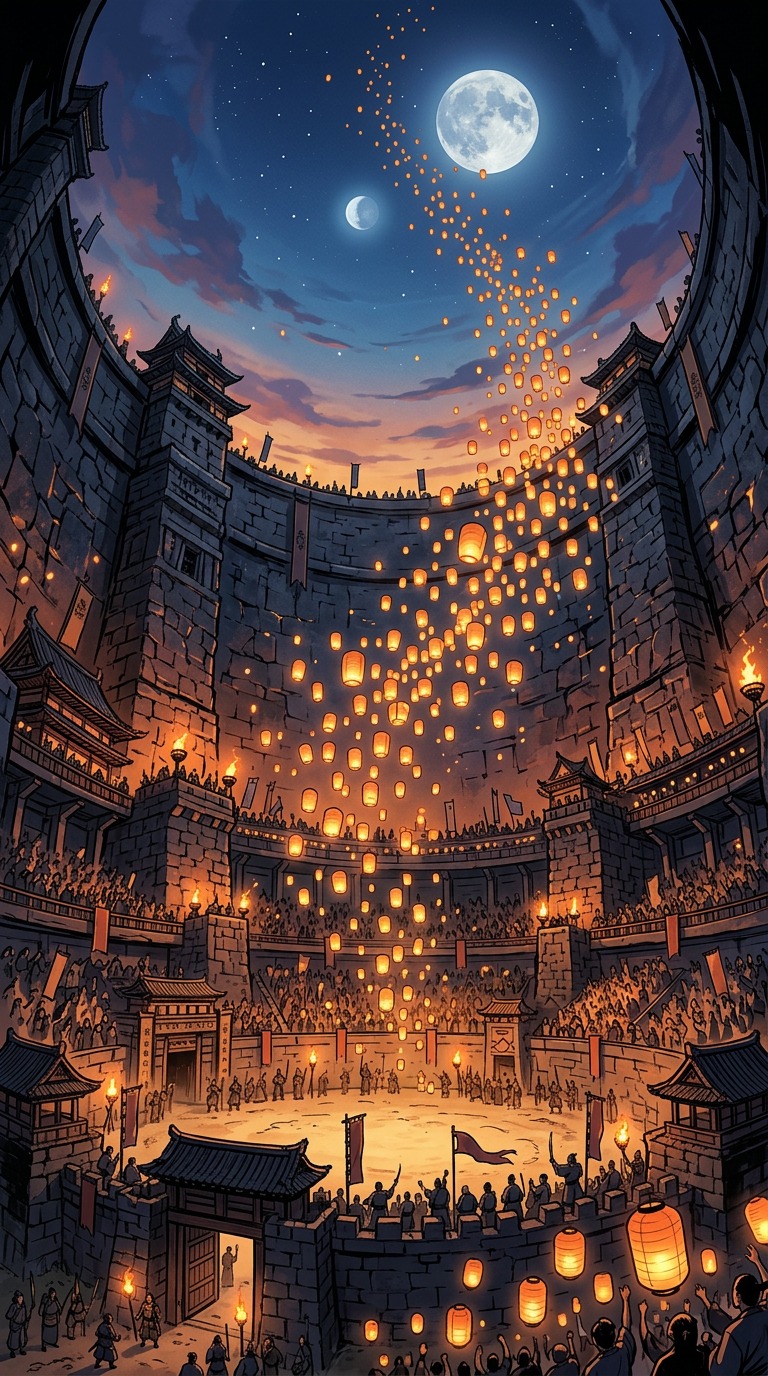
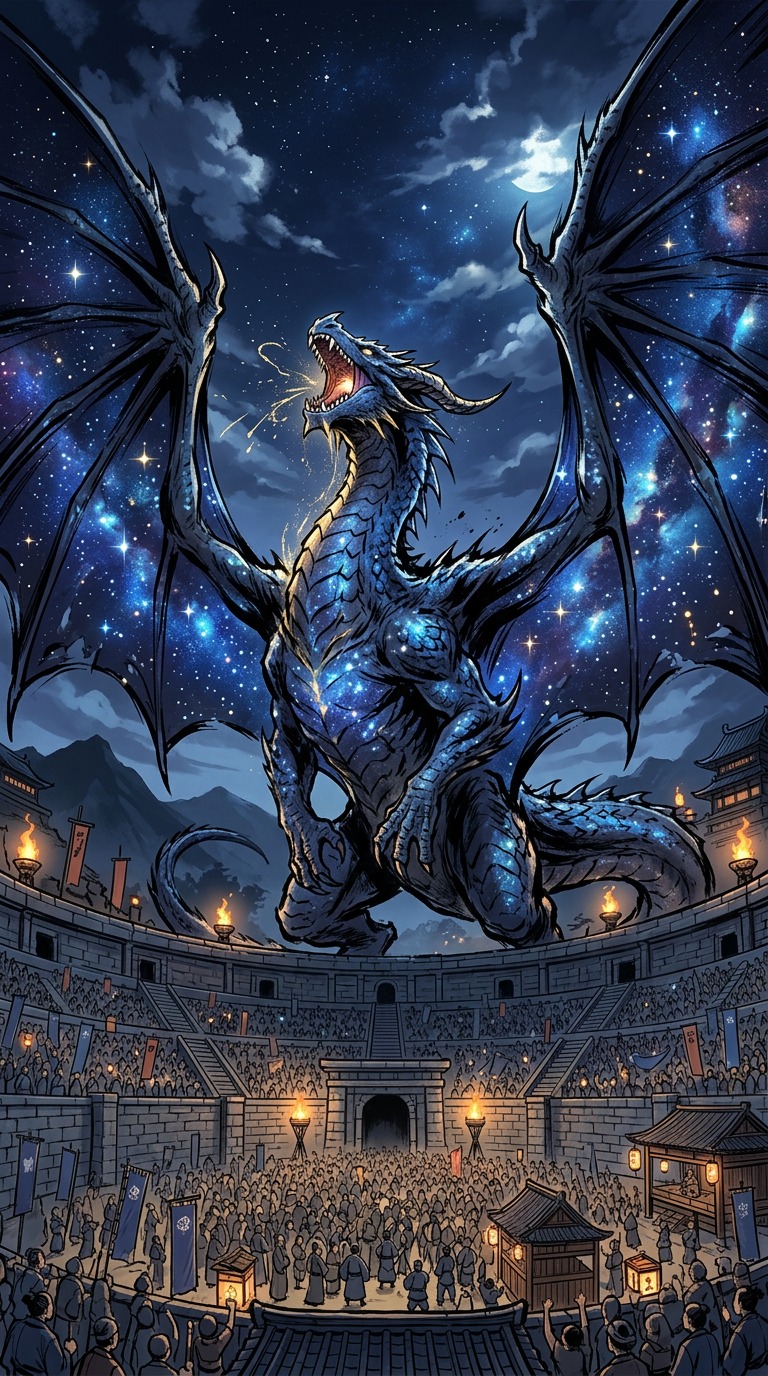
They built the arena on top of it — not to honor the moment, but because no one had the courage to build on ground that remembered. Massive stone walls, older than any clan's memory, formed a circle at the exact geographic heart of the Spiritfang realm.
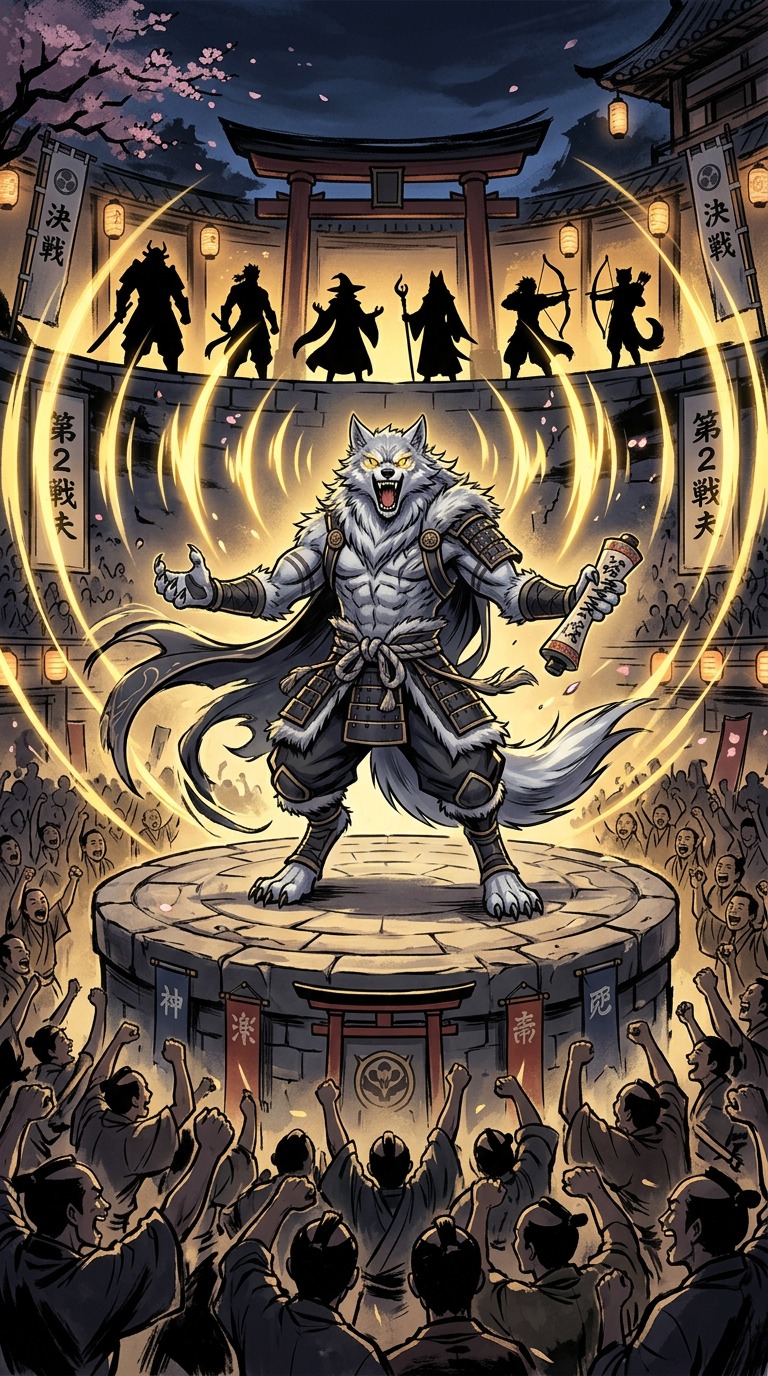
Tonight, lanterns hung by the thousands. The crowd filled every tier of stone seating until their bodies became a single breathing mass. Sixteen fighters had registered. At the center of the arena stood the announcer. When he opened his mouth, his voice did not travel through air — it arrived in your chest first, then your ears.
On Fangs Echo — The Sound Wolf
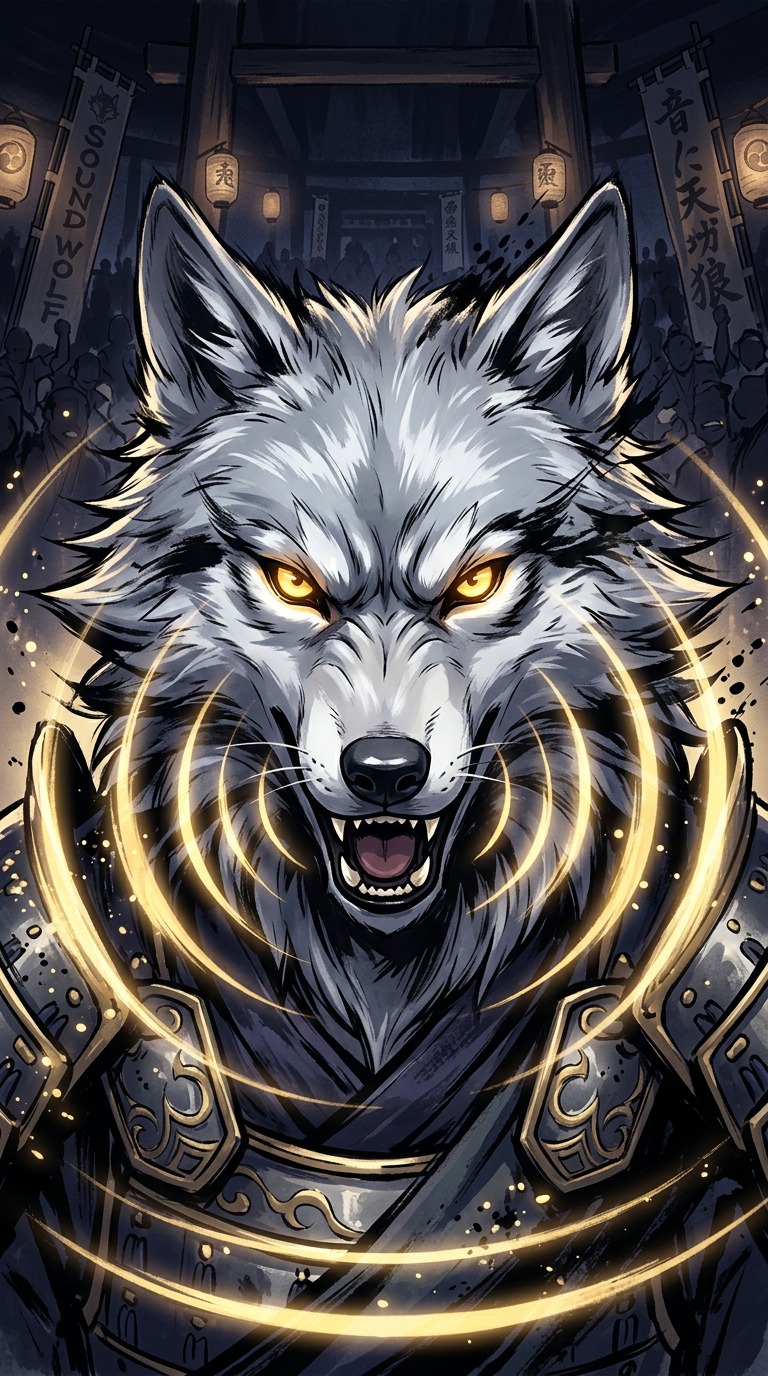
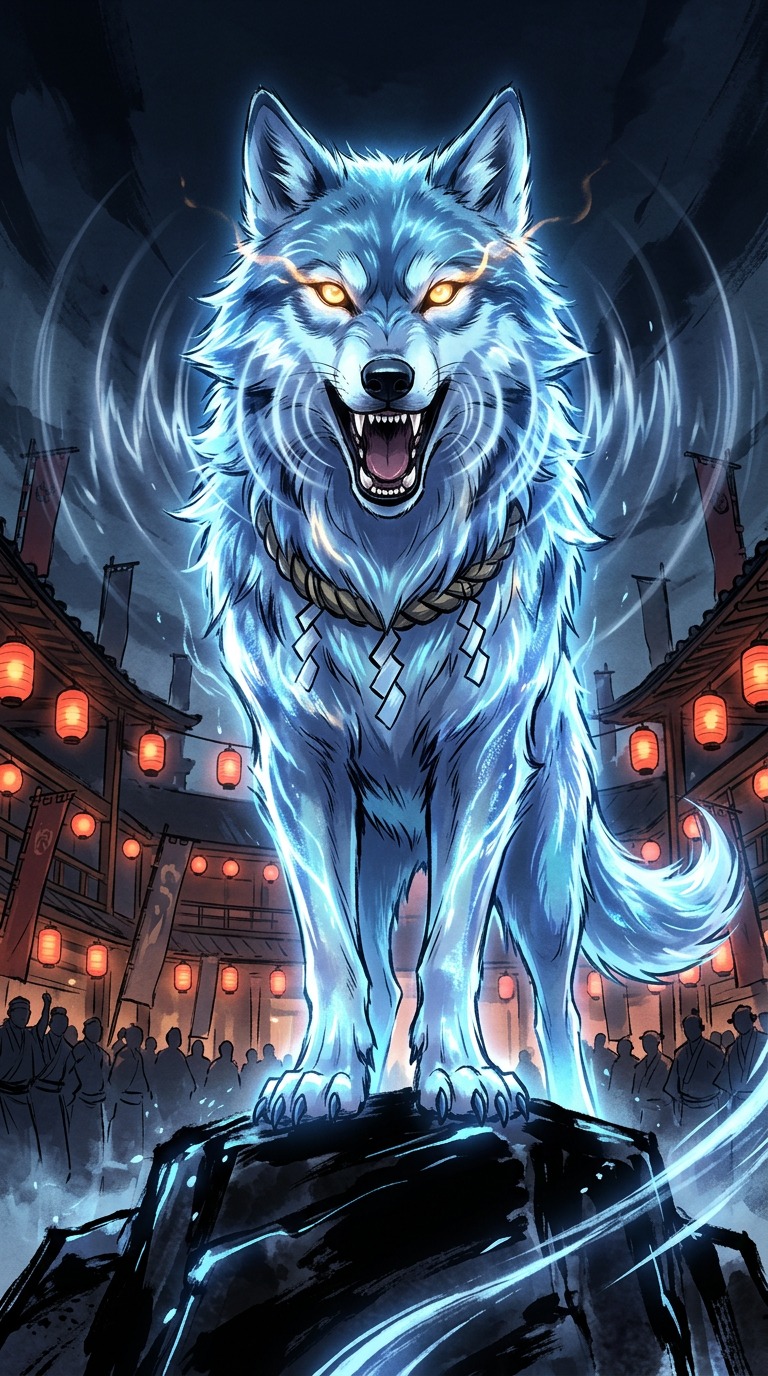
His real name is lost — and lost is perhaps the wrong word, because lost implies it went somewhere it could be recovered from. The Sound Wolf has been called Fangs Echo for so long that the name has become the man, or the man has become the name, or perhaps the distinction stopped mattering around the time most of his contemporaries stopped existing. He is wolf-clan by descent, Sound-Walker by nature, and announcer by something that cannot be called choice because it was never presented as an option. He showed up at the first tournament, two hundred years ago, before the committee existed as a committee. He was there. His voice rang out. Every person present reported, afterward, that the announcements had felt correct in a way they could not articulate — that the words had matched the weight of the moment, that the names had sounded like what the fighters actually were rather than who they said they were. No one appointed him. He simply continued, tournament after tournament, and eventually his presence became as structural as the platform itself.
He has perfect recall of every match in every tournament — not memory as humans understand memory, soft at the edges and colored by feeling, but recall: immediate, precise, total. If you ask him about a match from a hundred and sixty years ago, the pause before he answers is not the pause of recollection. He is not going back to find it. It is simply present. He has described it this way: "The second match of the third tournament, first round, southern quadrant. She opened with a feint to the left knee. He didn't take it. She did it again. He still didn't take it. The third time, she made the same feint and he took it — because by the third time, she had decided she wasn't feinting anymore, and he felt the difference. That was fifty-eight seconds into the match. She won in four minutes and twelve seconds. He bowed twice. He never competed again." He said this without pause, without searching. As if it had happened a breath ago.
He does not predict outcomes. Fighters come to him before their matches asking for readings, asking what he sees, and he declines — with the specific patience of a person who has answered this question many times. His answer is this: "I don't see futures. I see the truth of what is already present. Sometimes that looks like prediction. But I am not seeing forward — I am seeing what is already here, in this fighter, in this moment, in this match, and I am saying it plainly. If that tells you something about what happens next, that is not me predicting. That is you hearing."
Two things about his voice: it does not travel through air the way sound travels through air. It arrives in the chest first — a resonance, a pressure, a sense of something landing — and then the ears catch up. This is not metaphor. Scholars have documented it instrumentally: his voice reaches the sternum before it reaches the eardrum, which should not be physically possible by any theory of acoustics. The second thing: standing within twenty feet of him while he announces at full resonance leaves fighters feeling seen somewhere embarrassing. Not threatened. Seen in the way of a thing you did not mean to show, that was noticed, that is now simply part of the room. Most fighters, it turns out, are not prepared for that.
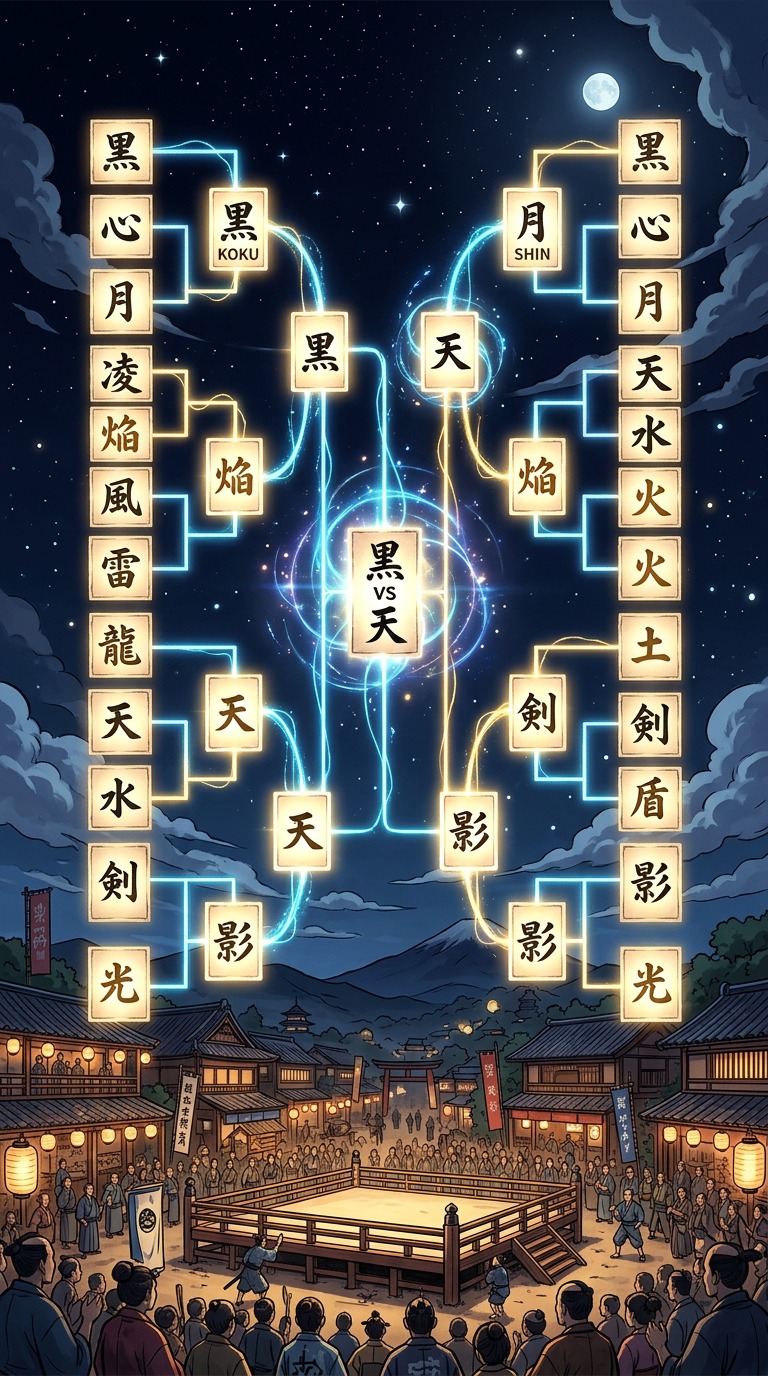
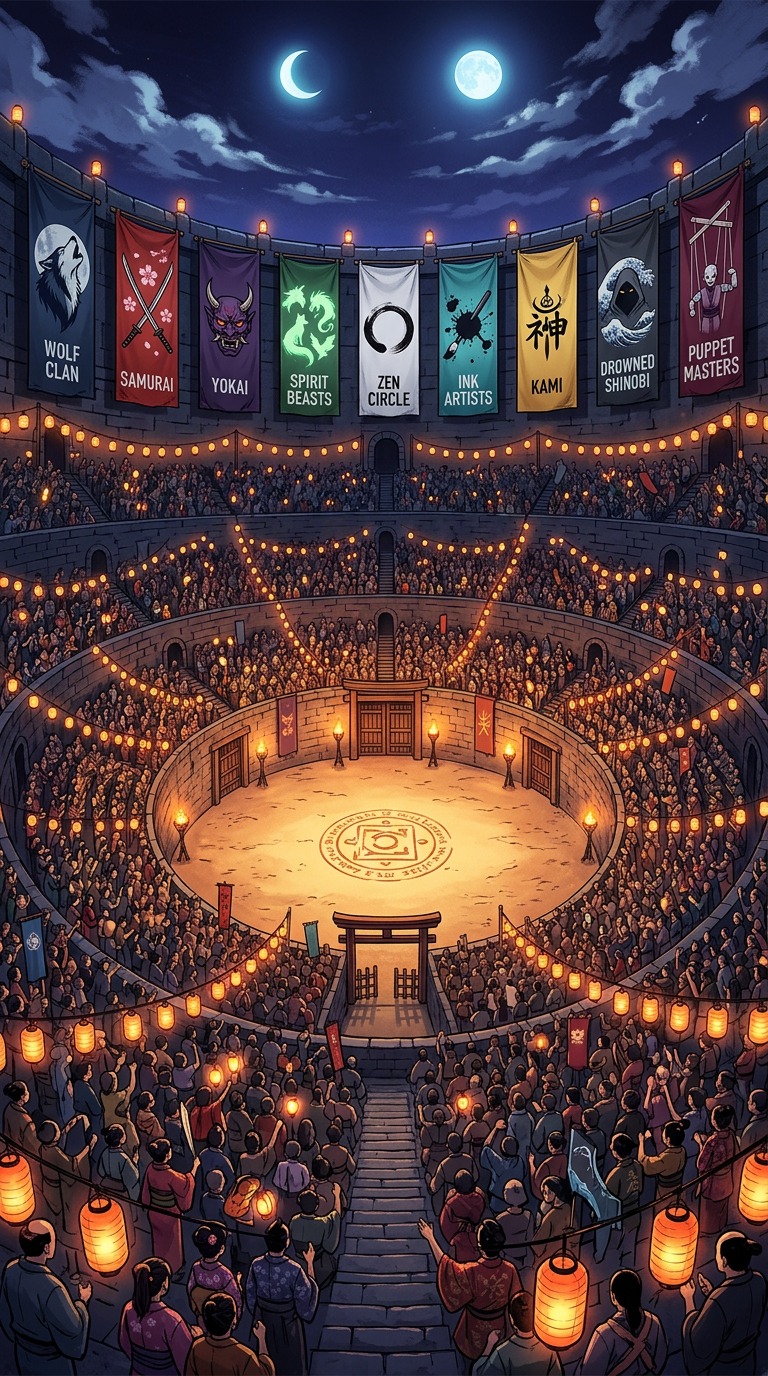
The tournament was called, formally, the Shōri no Bracket — the Bracket of Victory. But every fighter who had walked the path before called it something different. They called it the Tournament of Unmarked Graves. Because the fighting here didn't always kill you. Sometimes it just removed whatever made you you.
When the Sound Wolf sings, even the mountains bow to listen.
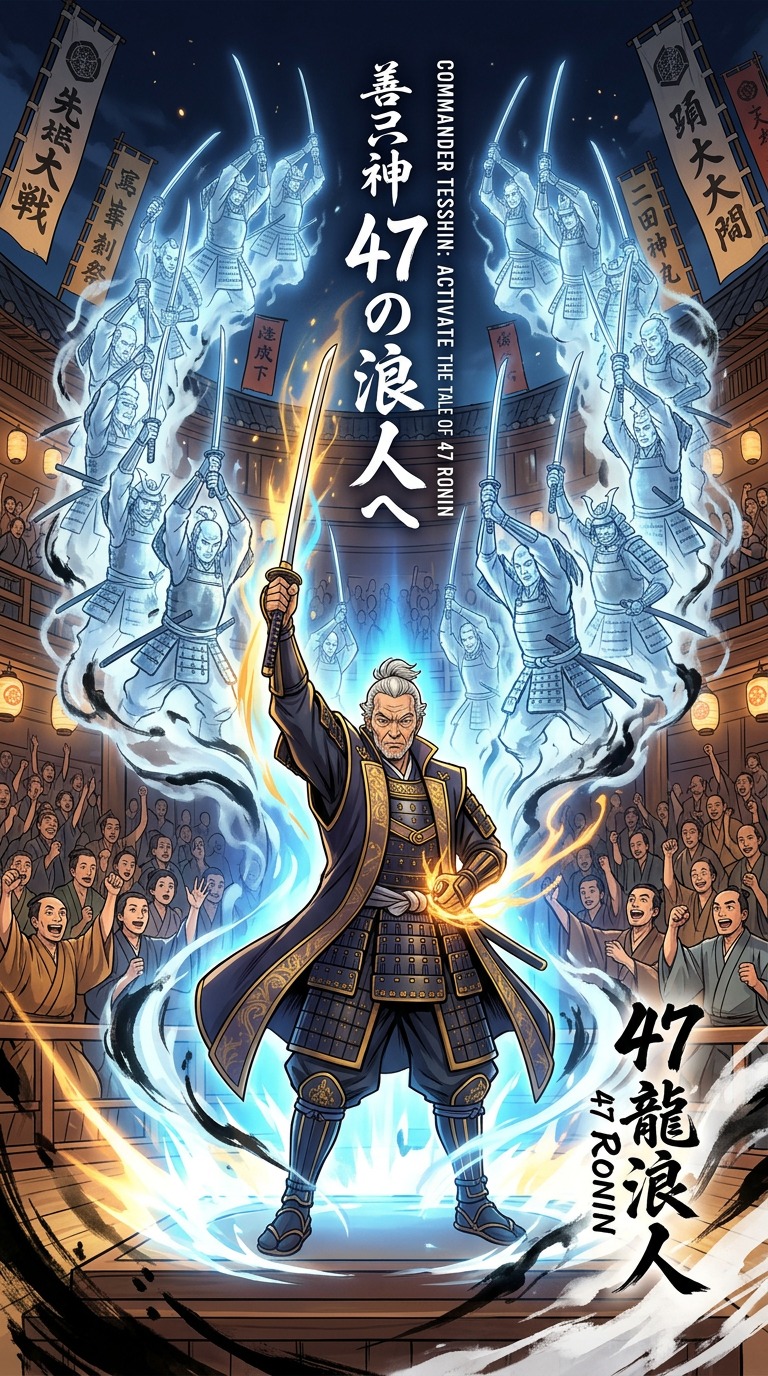
Round One — Match One: Commander Tesshin vs. Yuki Onna
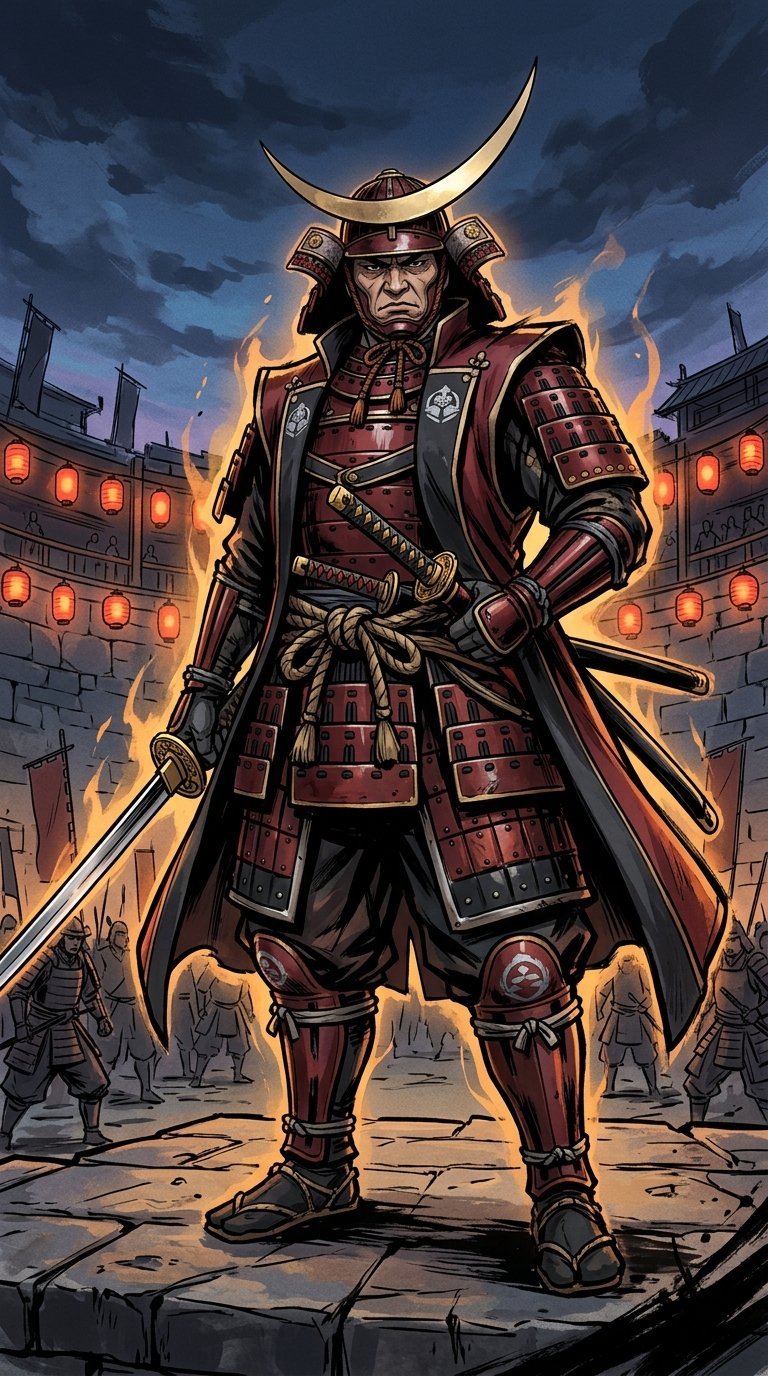
"Commander Tesshin — forty-three campaigns, zero defeats. He did not come here to test himself. He came because he has already tested himself, and needed to know if anyone else had."
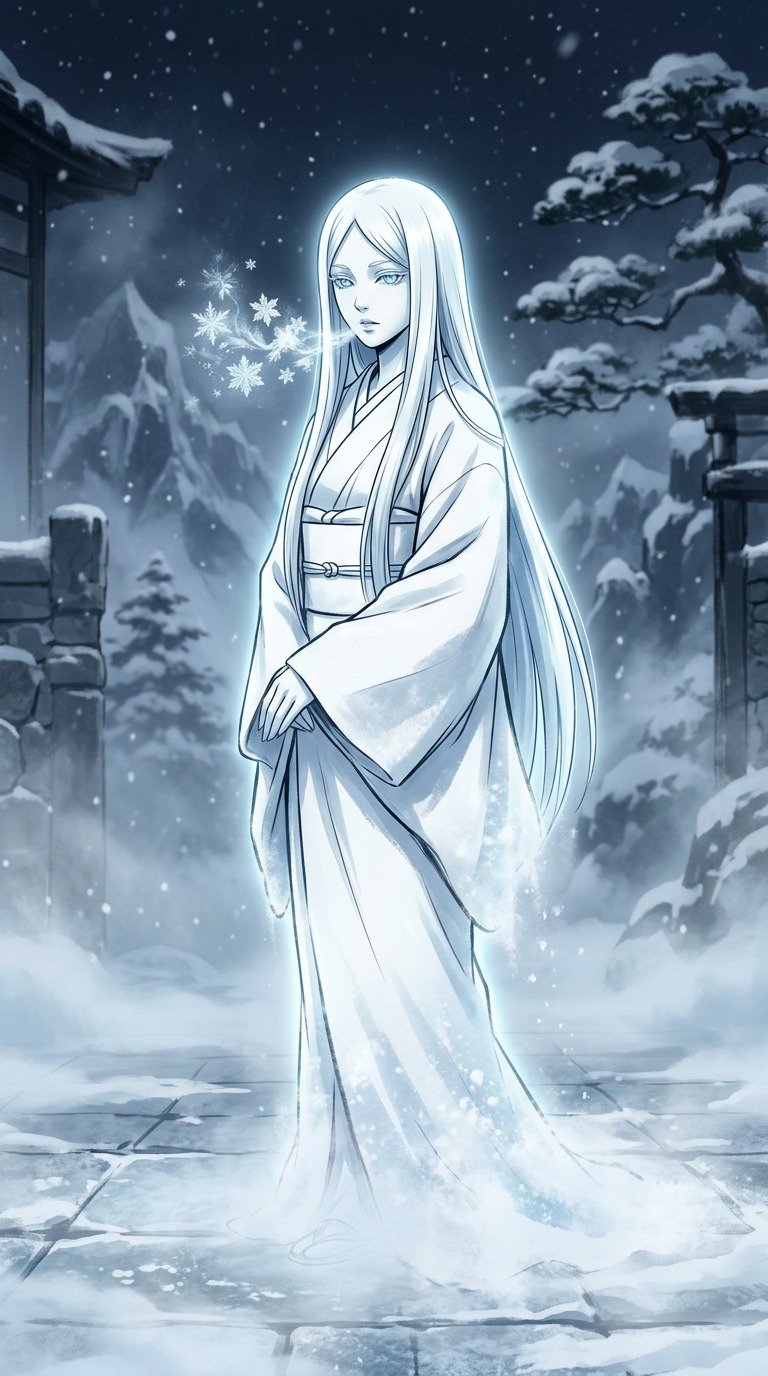
"Yuki Onna — three hundred years of documented combat, zero defeats. She has never, in three centuries, prepared for an opponent. Tonight is the first time that has been a mistake."
"Three hundred years of patience — against forty years of preparation. Fighters, the platform is yours."
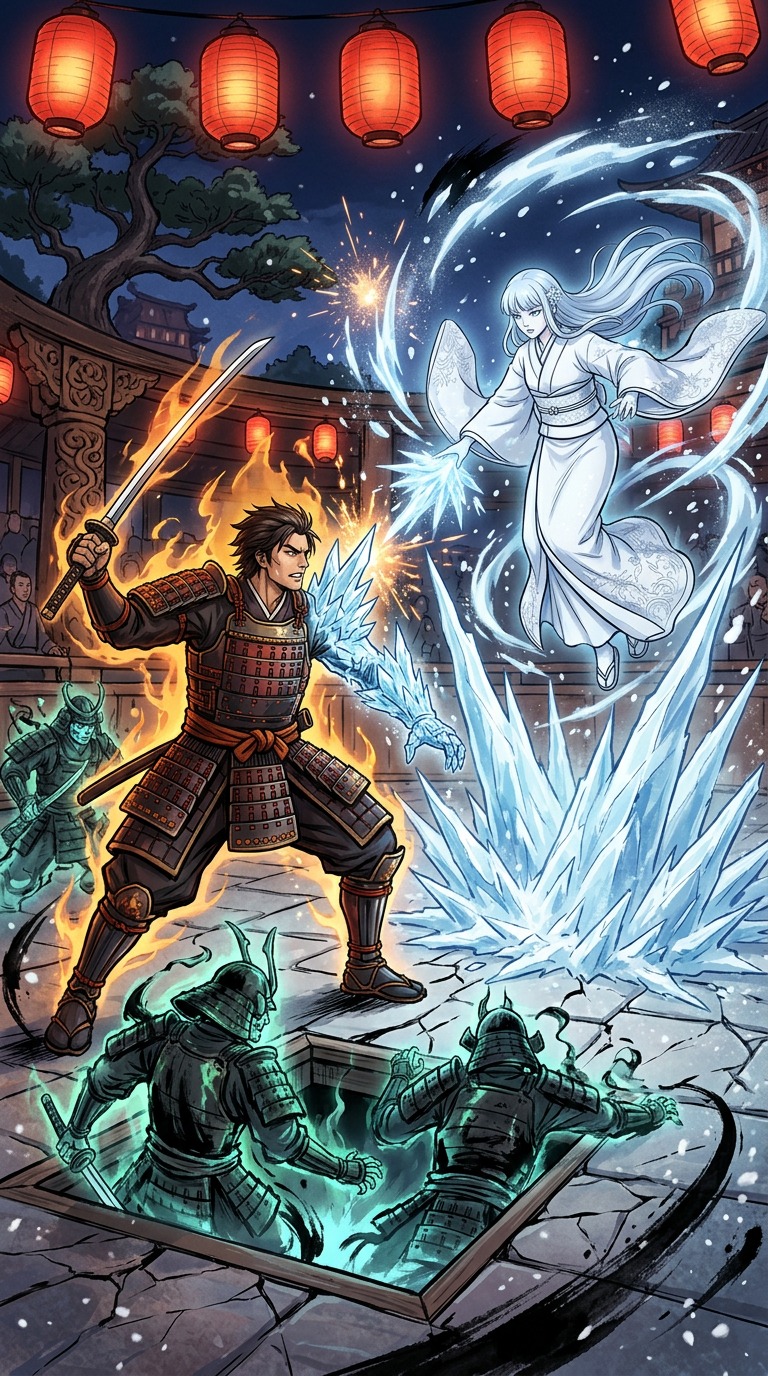
Match One: The Fight
The temperature dropped before she moved. That was the first thing. Not dramatically — not the theatrical frost-breath of stories. Subtle. The kind of cold that happens in shadow when the sun shifts. A woman in the third row felt it first and pulled her outer robe tighter without knowing why. Then the man beside her did the same thing. Then the entire crowd, row by row, fell into the quiet of people who have suddenly remembered that winter is real and patient, and that it has been here before them, and that it will be here after.
Yuki Onna moved to the center of the platform and waited. She did not take a stance. Stance implies preparation, implies anticipation of something specific. She simply stood, three hundred years of standing translated into a kind of mass, and the air around her thickened with the particular cold that precedes suffering. Breath became visible in the arena for the first time.
Commander Tesshin walked to the platform. He did not run, did not stride, did not perform. He walked, the way a man walks to a meeting he has prepared for thoroughly. He had been thinking about this match — three calculations minimum, and he had performed considerably more than three — for nine months, since the moment her registration was confirmed. He had studied every documented match of hers that the archives contained. He had studied them until he could close his eyes and see her move, until her geometry lived in his body the way his own reflexes lived there. He had then spent four months training specifically against the conclusions he had drawn.
She came at him without preamble. The frost struck his right arm at the shoulder, coating the joint in a hard shell of ice that radiated inward immediately, the cold finding the nerves and compressing them toward silence. His sword arm. It went first, as he had calculated it would. The crowd's sound changed — the sharp intake of three hundred people who had just watched the defending champion lose his sword arm in the opening exchange.
Tesshin stood with his right arm locked at his side, immovable in its casing, and said nothing, and did not change his expression, and reached across his body with his left hand and drew the secondary blade from his left hip. The crowd erupted. Not polite applause — a full-body sound, the roar of people who have just understood something. He had practiced left-hand for four months. Four months of deliberate, disciplined, left-hand sword work, knowing she would take his right arm first, knowing the paralysis was her opening signature, building a second fluency in the hand he had spent thirty years ignoring. He had come in planning to lose his sword arm. He had planned for the thing she always did, and built around it, and turned her opening move into a door he had already walked through before the match started.
She paused. It was half a second, perhaps less. But it was a pause, and in three hundred years of documented combat, Yuki Onna had never paused. The elder of the Zen Circle noted it in his observation ledger. The elder of the Samurai Masters quietly set his pen down and simply watched.
What followed was eight exchanges. He was slower on the left side — not by enough to lose, but by enough that she should have closed the gap immediately, and she didn't, and the reason she didn't was that she was calculating for the first time in a century. She had never been here before. She had beaten mortals. She had beaten practitioners. But she had never been beaten to her own signature move by a mortal who had done his homework.
It was in the seventh exchange that Yuki Onna felt it — something she had no ready word for, because she had not needed the word before. It was not fear. Fear was something she inspired, not felt. It was older than fear: a recognition. The specific, precise recognition of a thing that cannot be outlasted. She had survived everything by outlasting it. And here, on the seventh exchange, she recognized that this one — this mortal man with his forty years and his four months of left-hand training — had already outlasted her. Not in time. In preparation. He had spent nine months making this moment his. And there was nothing she could do that was not already inside his calculations.
He took the eighth exchange cleanly. The secondary blade found her guard, and her frost reflex answered at the wrong angle — overcompensating for a feint she had begun to see everywhere — and she stepped back, and her heel found the edge of the platform, and she stopped. Not fell. Stopped. She had caught herself. She could have continued. Her body was still capable. He waited, left blade extended, right arm immovable at his side, breath visible in the air between them.
She looked at him for three full seconds. Then Yuki Onna bowed. The crowd was silent for the length of the bow, and then the sound that came out of three hundred people at once was not a cheer but something rawer — a collective exhale of witnessing. She had never bowed. Not in three hundred years of competition, not once, not to anyone. She did it because it was true. Because the man in front of her had earned it in a way she could not dispute and did not wish to. She walked from the platform without speaking. The frost lingered on the arena floor for twenty minutes after she left.
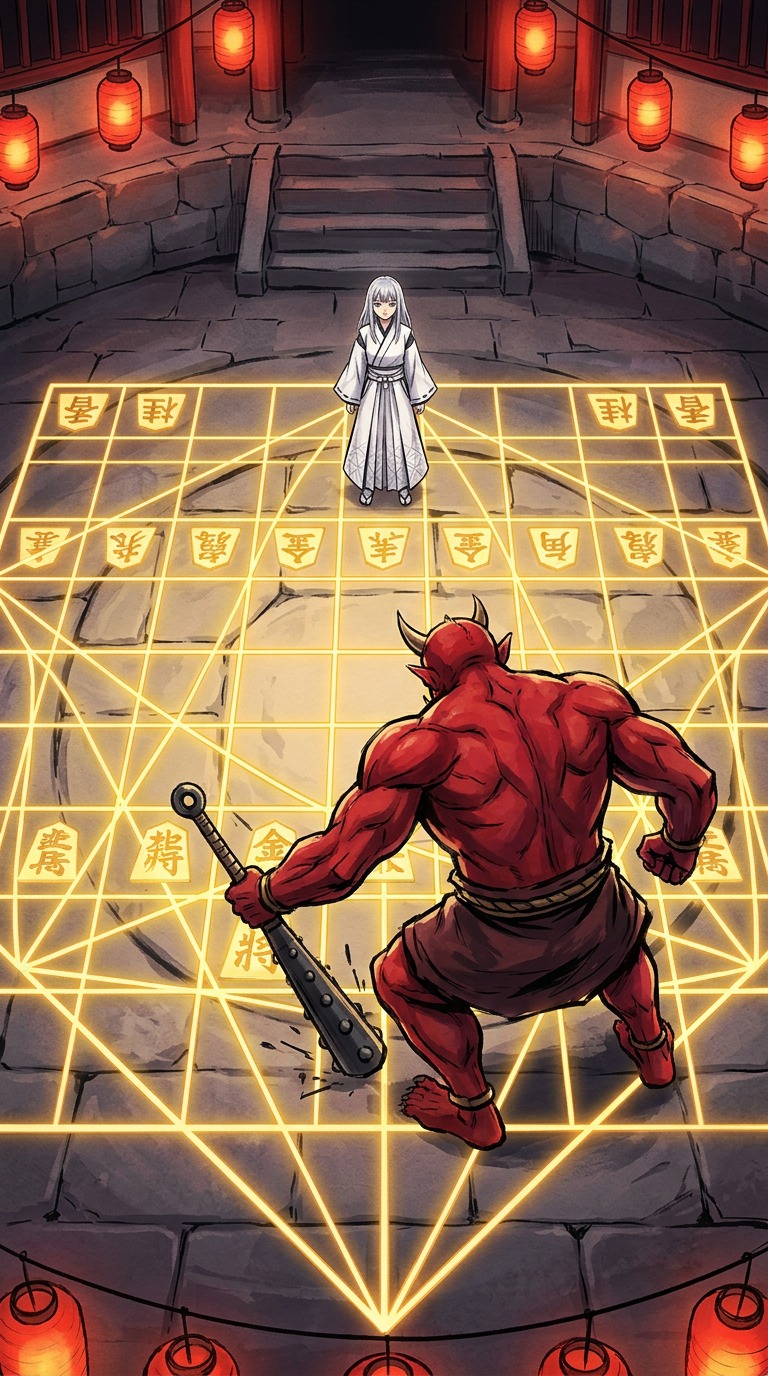
Round One — Match Two: Kaname vs. the Oni
"Kaname — twenty-three years old, undefeated since sixteen, never taken physical damage in competition. Her own words for her style: 'I don't fight. I finish.' She will walk onto this platform without a weapon. That is not an oversight."
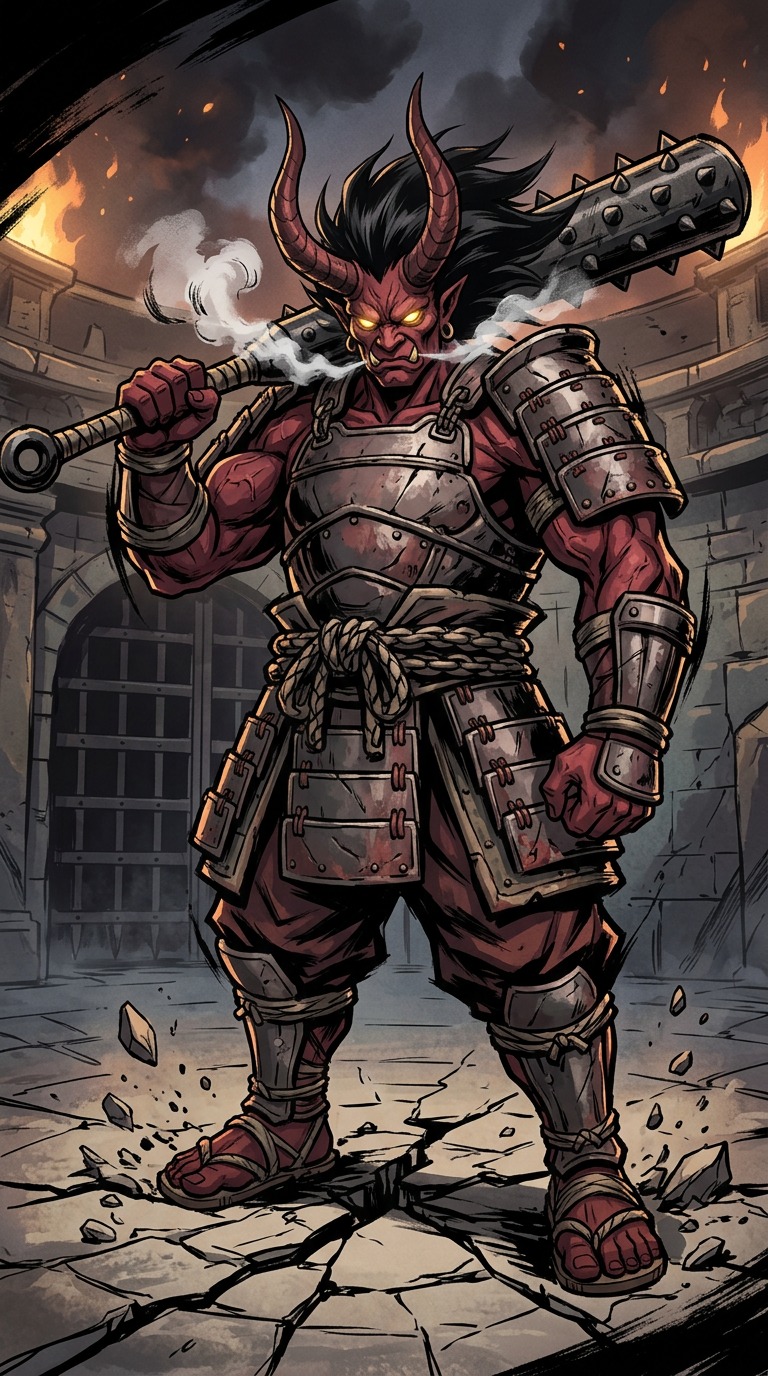
"The Oni of Crimson Horns — over a thousand years old, three full brackets won without a single loss. He studied Kaname for exactly zero minutes. He is not afraid. This — specifically this — is the problem."
"The youngest fighter in the bracket — against the oldest. We will learn whether time moves forward, or simply circles back."
Match Two: The Fight
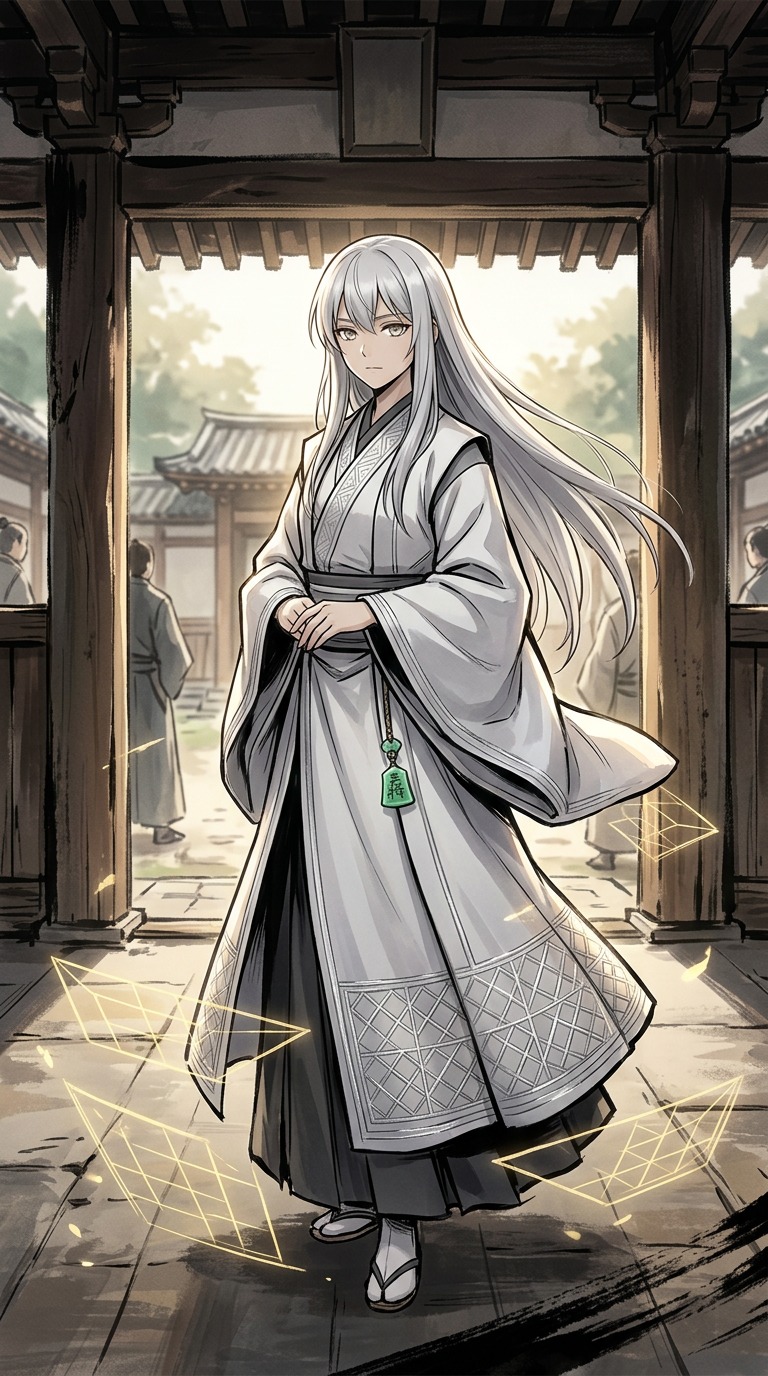
Kaname walked onto the platform and did not draw a weapon. The crowd registered this slowly. First, confused murmurs — perhaps she had not yet reached for it. Then, as she settled into her opening position and it became clear that there was no weapon coming, the murmurs shifted into a kind of nervous laughter, the sound of people who want to believe this is part of a performance rather than the thing itself.
The Oni was twelve feet of weight and age and accumulated violence. He entered the platform the way mountains enter skylines — not dramatically, but with a mass that rearranged the air around everything nearby. The stone under his feet registered the difference. The crowd felt it in the soles of their shoes. He looked at the young woman across the platform, and his expression was the expression of a man looking at a courtyard sparrow who has accidentally wandered into an arena. Not contemptuous. Simply: unworried.
He charged. The stone cracked under his first full stride — not chipped, not dented, cracked, a sound like a tree splitting in winter that rolled through the arena and hit the back wall before the crowd had finished flinching. The displaced air arrived at the front rows like a physical push. Three fighters in the waiting area took involuntary steps back.
Kaname was not where the charge landed. This is not because she was fast. She was twenty-three and she was human. She was not there because she had calculated where the charge would go twelve seconds before it began, and she had been in a different position since before he committed to it. The Oni's kanabō connected with the obsidian platform. The platform held — because it always holds — but the shockwave knocked four spectators from their seats.
He reset. Charged again. She was somewhere else again. The crowd's nervous laughter had completely stopped. It had been replaced by a silence that was not calm. She was not running from him. She was standing in a series of locations that he was not, and she was doing it with a kind of unhurried precision that suggested she knew where all the locations he would not be were, in advance, and was simply occupying them one at a time.
Queen's Gambit activated in the fourth exchange. The chess pattern rose from the platform surface in light — not glowing, exactly, not fire, but the light of something being revealed that was already there. A geometric grid, alive and constraining and precise. The Oni looked down at it. He looked at the lines that had appeared beneath his feet, the angles that had begun to narrow around him. His face, for the first time, held something that was not contempt. It was stranger than fear. It was the expression of a creature encountering, for the first time in a millennium, something it did not have a file on.
Uncertainty. At his age, uncertainty is not a feeling. It is an event.
Kaname's internal understanding of Zugzwang — the architecture she was constructing around him in real time: It doesn't restrict you. That's the misunderstanding. People think the Zugzwang trap takes away options. It doesn't. You have the same options you started with. It reveals that all your choices were already restrictions. Your power was always a cage — you just couldn't see the bars until there was no comfortable move left. I am not trapping him. I am showing him the shape of what he always was.
The Oni moved. Every move was correct by the standards of what he was — overwhelming, direct, decisive, the kind of force that had ended a thousand years of opposition. Every move was also, by the logic of the board that now surrounded him, a move that cost him something. He could move. He simply could not move without giving ground he would not recover. He moved, and paid. Moved again, and paid again. The crowd was standing.
The Oni dropped to one knee. Not from physical defeat — his body was functionally intact, because Kaname had not struck it. He dropped because the board had made every remaining option worse than accepting a lower position, and even a thousand years of refusing to kneel cannot override the mathematics of having no move that does not cost you more than you have.
He looked up at her. She was standing at the edge of the pattern, unhurried, unmarked, twenty-three years old.
"I don't know how to not move," he said. His voice was low and carried anyway. He was not asking for mercy. He was making an observation, precise and honest: he was constituted, all the way through, for movement and force and forward pressure, and the thing she had built around him had made the very nature of what he was into the mechanism of his defeat.
Kaname activated Checkmate. The pattern collapsed inward, resolved, concluded — the geometry reached its terminus and released, and the match was over. The Oni stood. He walked to the gate. He stopped at the edge of the archway and turned back to look at her across the full length of the arena for three full seconds before he turned and was gone. Three seconds is not a long time. For a creature who has not voluntarily acknowledged another fighter's existence in a thousand years, it is the closest thing to acknowledgment his nature contains.
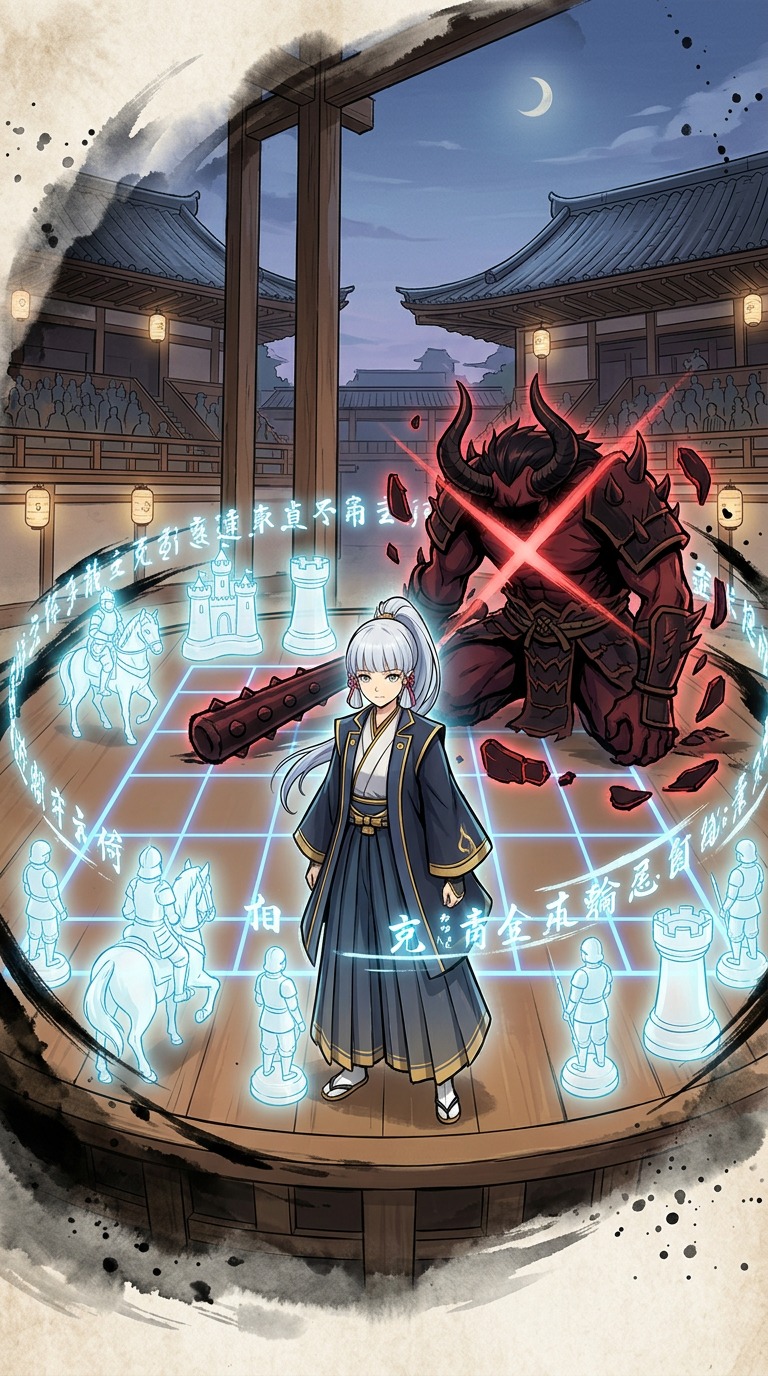
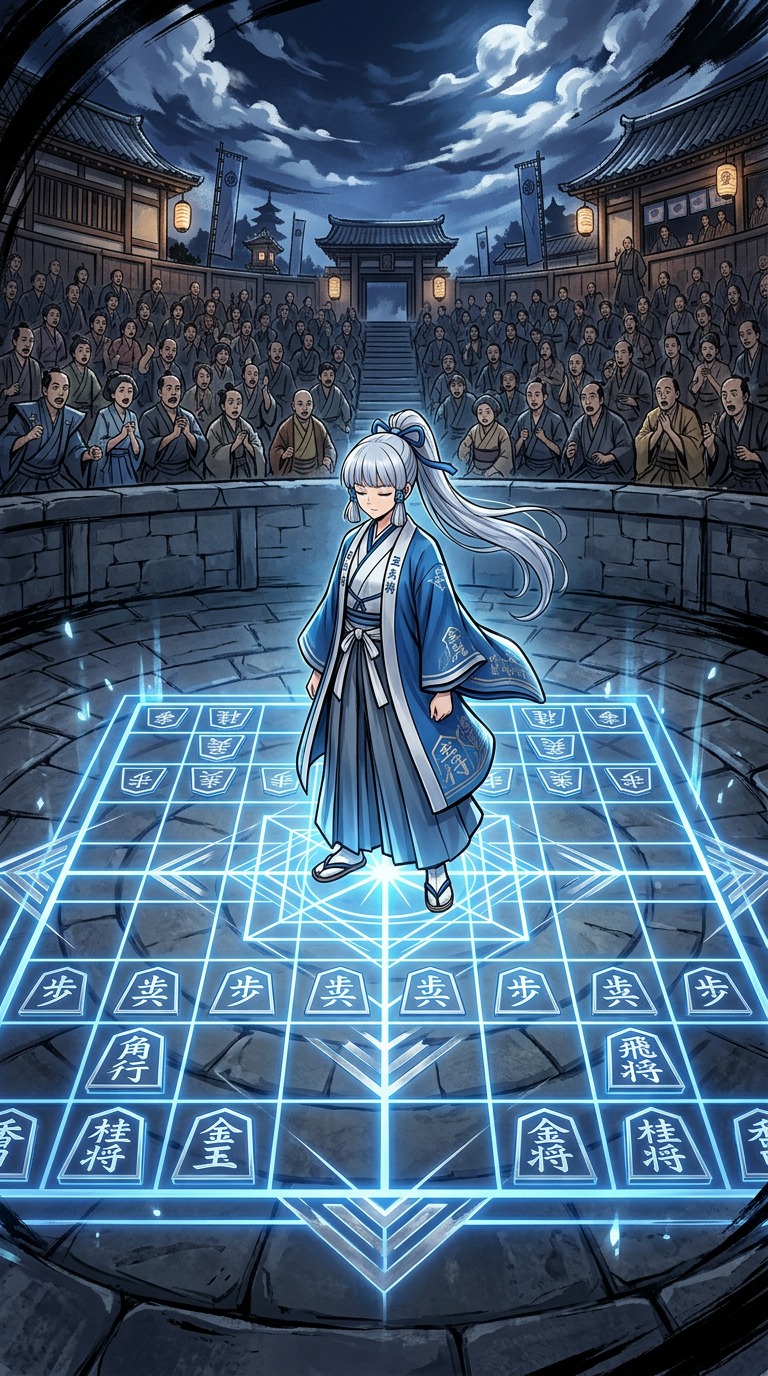
Round One — Match Three: Zen Master vs. Kenjiro
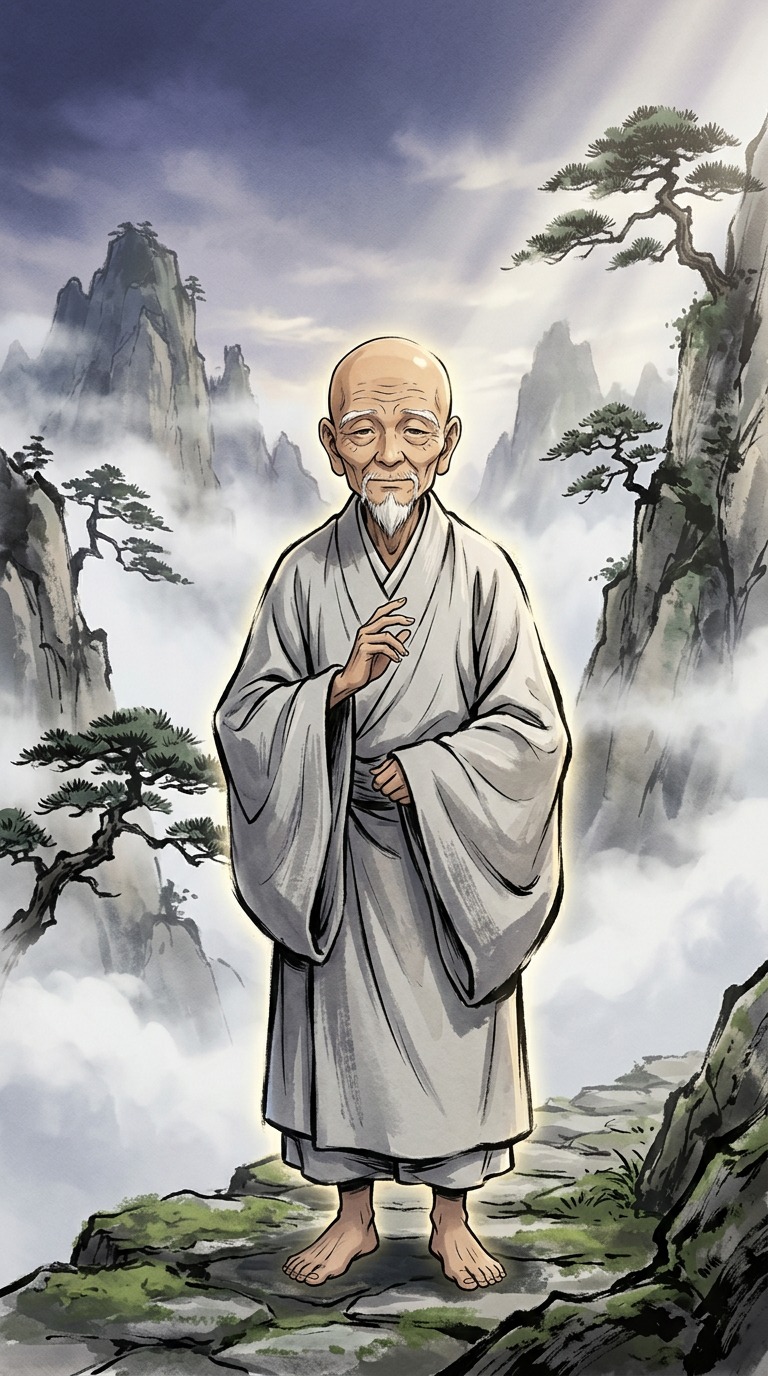
"The Zen Master — age unverifiable, some of his matches predate the record-keeping system. He has never won a match by striking. Not once in documented history. Every win ends by the opponent's own failure, discovered under pressure."
"Kenjiro — thirty-four years old, eleven consecutive wins, inventor of the spinning dual-blade form. Three separate opponents described him identically: 'The most technically perfect fighter I have ever lost to.'"
"Perfection of form — against the absence of form. The dancer — against the floor."
Match Three: The Fight
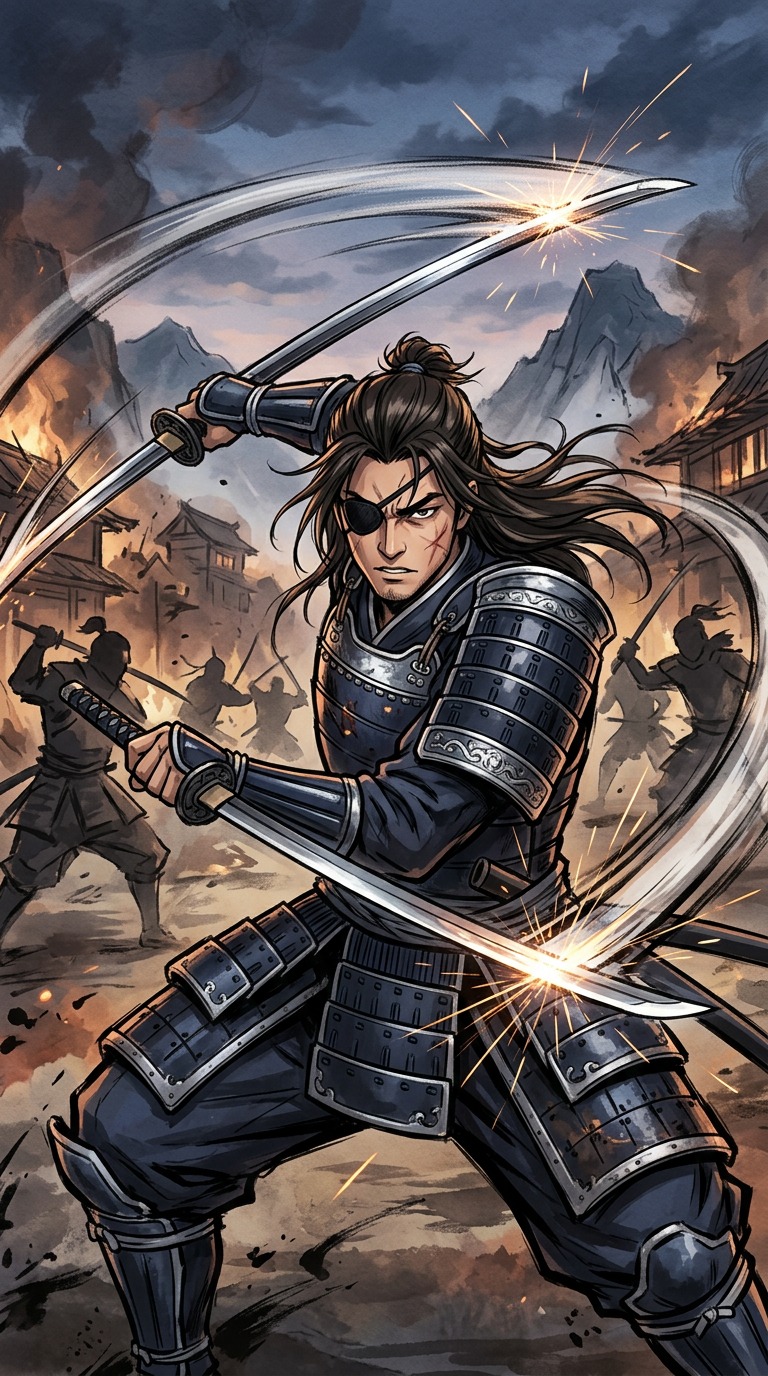
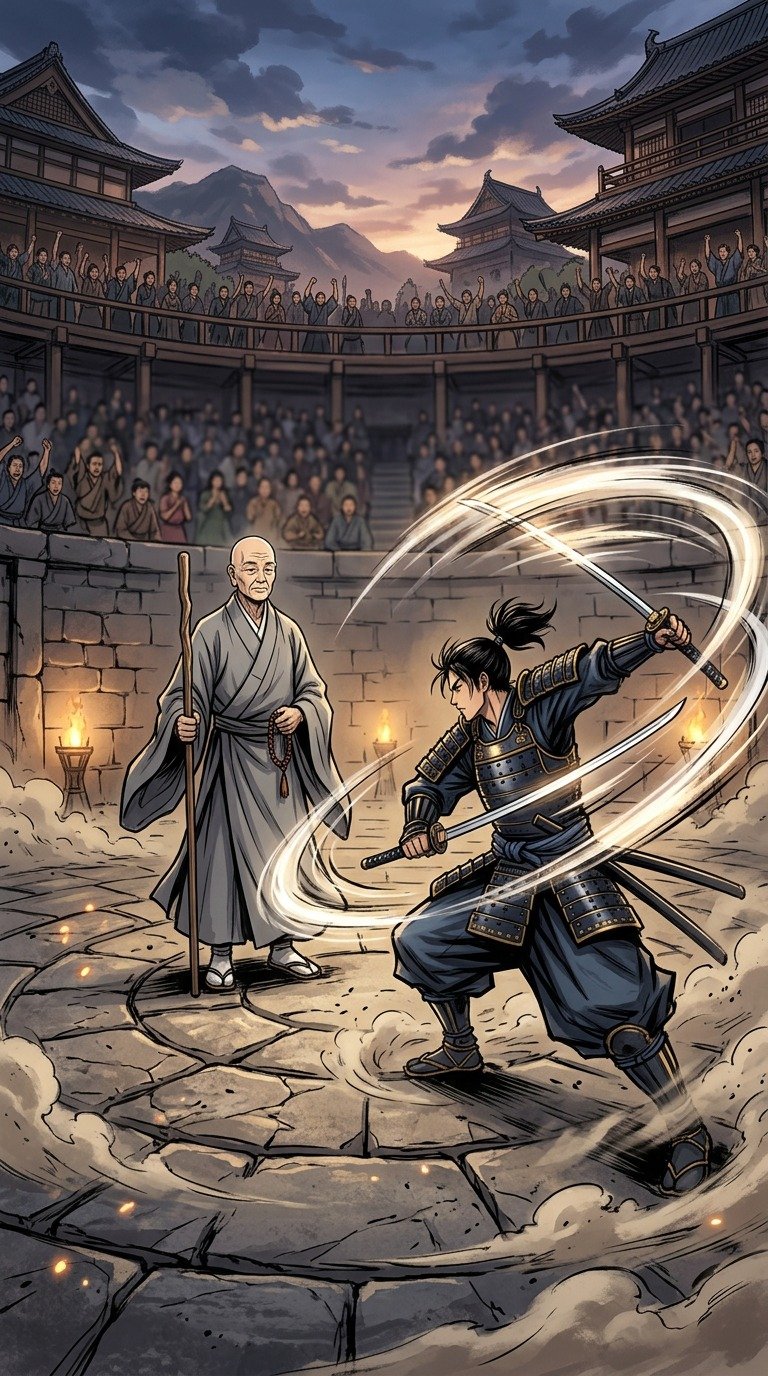
Kenjiro entered spinning. This is not metaphor — he walked onto the platform in the opening rotation of his form, the dual blades already in motion, the geometry of the spinning dual-blade technique already alive in the air before he reached his opening mark. The crowd responded the way the crowd always responded to the sight of it: full-throated and immediate. The blades moved through the air with a sound that was half whistle and half percussion, a specific rhythm that the people who had seen him compete before already knew and had been waiting for all evening. He was thirty-four years old and technically perfect and the spinning form was beautiful in the way that thirty-four years of becoming something can be beautiful.
The Zen Master took one step left.
The crowd went quiet in a specific way — not surprised, not confused, but suddenly aware that they were witnessing a thing that had a shape, and the shape was one they did not yet have the language for. The spin had not landed. The Zen Master had simply been somewhere that the spin could not find him, and the step that had accomplished this was so small, so unhurried, so devoid of any martial drama, that it had looked less like evasion and more like a man shifting his weight to be more comfortable.
For Kenjiro, the first stumble happened in the third exchange. His right foot landed two inches from where his form called for it. Two inches. Nobody in the stands could have measured it. He felt it. His technique had never failed him — through the decade of creation, through the refinement, through the testing. Its reliability was not just tactical. It was existential. He was Kenjiro, and Kenjiro spun, and the spin was correct, and the correctness had always been the answer to every question a fight could ask.
The Siberian Trap — the three-exchange lock that the Zen Master's method constructed — felt from the inside like being on fire in a room where every door is open. Every instinct said: attack. Every instinct fired the signal, his body responded with total technical precision, and the attack was brilliant, and the attack did not land, and the exchange ended with the Zen Master one step away from where the attack arrived, unmoved, unhurt, simply: elsewhere. Three times. Three brilliant, technically perfect, completely correct attacks that found nothing.
The twenty-third exchange was Kenjiro's moment of genius. The reverse-spin counter, the thing that existed in the negative space of his own form — the attack that the spinning dual-blade technique implied but had never needed to produce. He deployed it now, and it was extraordinary. The crowd screamed. It was a genuine, involuntary sound. The stroke landed. It connected. The Zen Master accepted it, moved through it, steadied, and said, in a voice that was calm as old stone: "Yes. That one."
Two words. Not dismissal. Acknowledgment. The admission of a teacher who has just watched a student find something real. And something about those two words — the complete absence of surprise in them, the tone that suggested the Zen Master had been waiting for Kenjiro to find that specific thing — did more damage to Kenjiro than the evasion had. Because if the Zen Master had been waiting for it, then he had already known how to answer it.
Clairvoyant Sight, when it activated, showed Kenjiro the match's conclusion. Not the moment of defeat — the full sequence, the remaining exchanges, the technical precision of his own final charge, the way his form looked from outside himself. And the thing that broke him was not losing. The thing that broke him was the beauty. His technique, in the vision, was flawless. Every movement, every transition, every strike — perfect. And it did not matter. The most perfect expression of everything he had spent thirty-four years becoming was simply, cleanly, inadequately insufficient. He could not find the flaw in himself to fix. There was no flaw. There was just him, at the limit of what technique could reach, and beyond that limit was something the Zen Master lived in so naturally that he had taken one step left and it had been enough.
Kenjiro charged. No technique. No spin. Just sincerity — the last thing you have when everything else has been stripped away. The Zen Master did not move dramatically. He received the charge the way old ground receives rain — absorbing it, redirecting it, returning nothing, holding everything — and Kenjiro was finished. Cleanly. Quickly. Without suffering.
He stood after, the spin finally stopped, his blades at his sides. His face held an expression the people who knew him best had never seen on him before. Not defeat. Something that comes after defeat, on the far side of it, when the grief of the losing has moved through. He looked more settled than he had in twenty years. As though something that had been braced in him for his entire career had, in being broken, also been released.
Round One — Match Four: Hanzo vs. Izumo
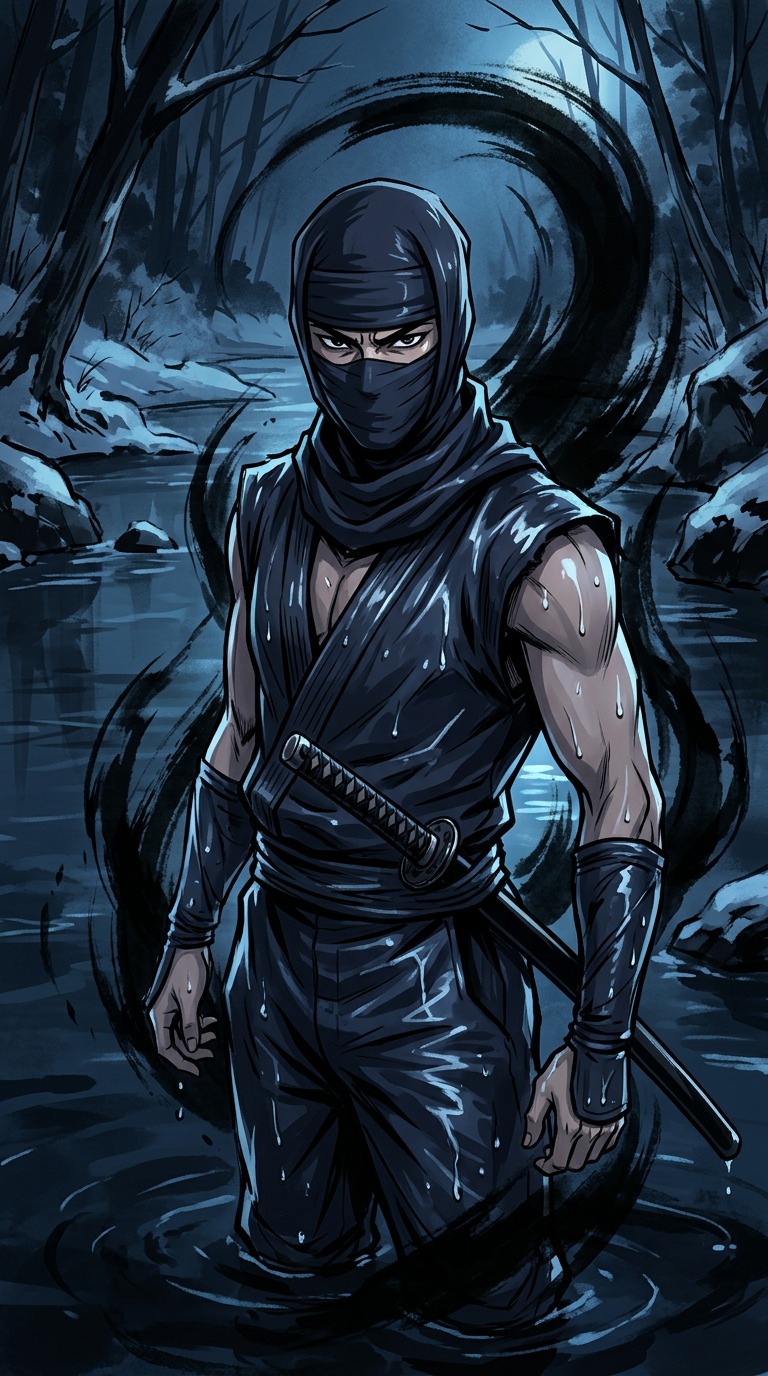
"Kagekiri no Hanzo — confirmed deceased by three separate witnesses, arrived for registration regardless. Fifteen tournament wins, eleven concluded before the crowd was certain they had begun. He treats questions about his continued existence as questions the asker should think more carefully about."
"Izumo — thirty years of shadow substitution, arrived at registration from four directions simultaneously. Four of him are visible in this arena right now. None of them are real. He has never, in a competitive match, been genuinely surprised."
"One fighter you cannot find. The other you cannot stop finding. Can you cut something with no fixed position? Can you fool something that doesn't look at faces?"
Match Four: The Fight
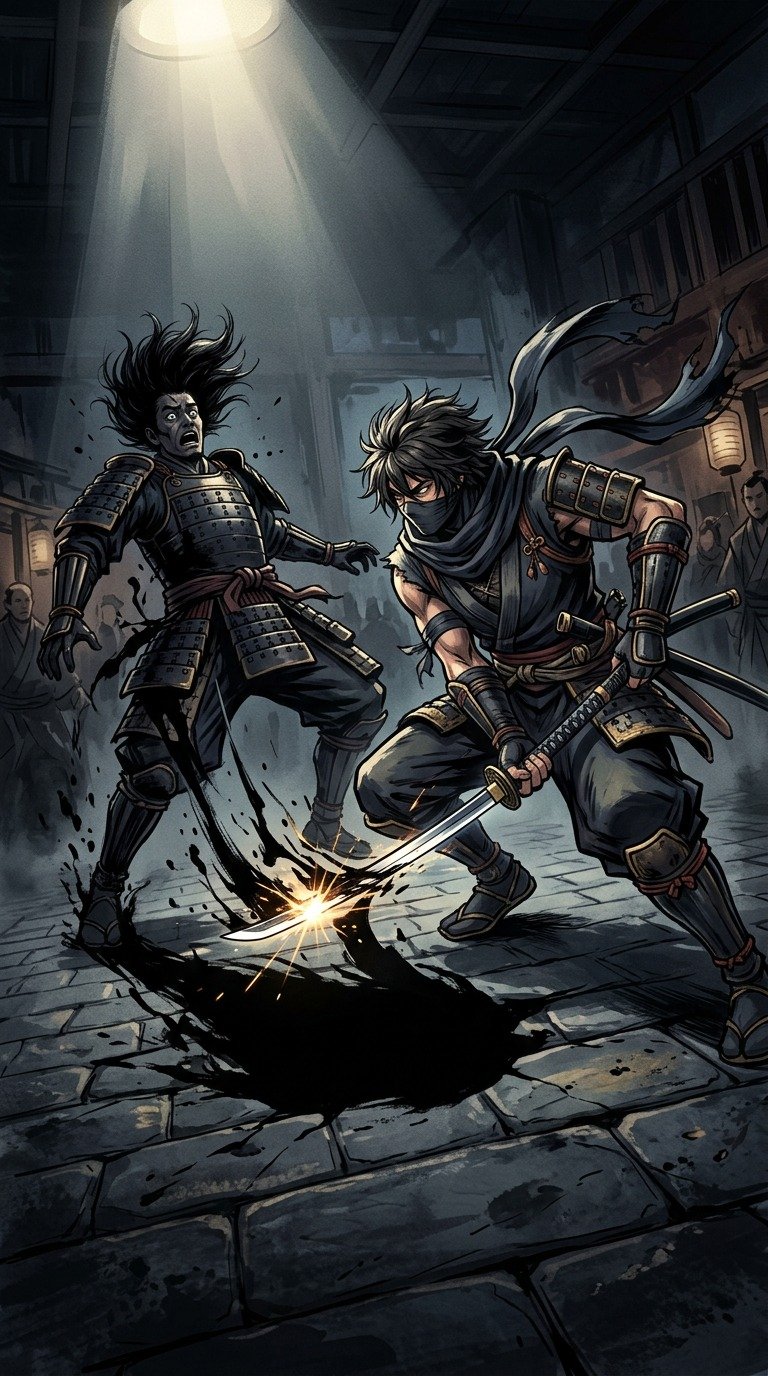
Izumo arrived on the platform as four. The walkout was a performance in itself: four versions appeared from different gates simultaneously, each one doing something entirely different. One was weeping, beautifully, the tears apparently genuine. One was eating, unhurriedly. One was bowing to spectators in the stands while simultaneously waving at different spectators. One was conducting an ongoing argument with someone who did not appear to exist.
The crowd loved it. They were already laughing — primed and delighted and exactly where the Thousand Faces needed them to be.
Hanzo was standing in the northern position and was not watching any of them.
This was the thing the crowd noticed first — slowly, the way you notice something wrong in a familiar room. They were watching the performance, laughing at the argument and the weeping and the eating and the elaborate bowing, and then someone in the second row looked at Hanzo, and said something to the person beside them, and that person looked, and then the crowd's laughter began to develop a self-consciousness at its edges. Because Hanzo was standing perfectly still with his eyes at a fixed point that was not any of the four visible Izumos. He had taken his position before they entered. He had not shifted. He was simply present — present with the particular quality of stillness that the Drowned Shinobi academy called completion: the state in which a shinobi has already finished performing all necessary calculations and is now simply waiting for the moment to move.
Shadow Paralysis spread outward from the platform's surface. Every shadow in the arena doubled. Sharpened. Became a thing with weight and intention. From Izumo's perspective, this was the home advantage — forty phantom shadows spreading outward from the four visible forms, each one geometrically precise, flooding the arena floor with a map that would take any normal opponent several seconds to parse.
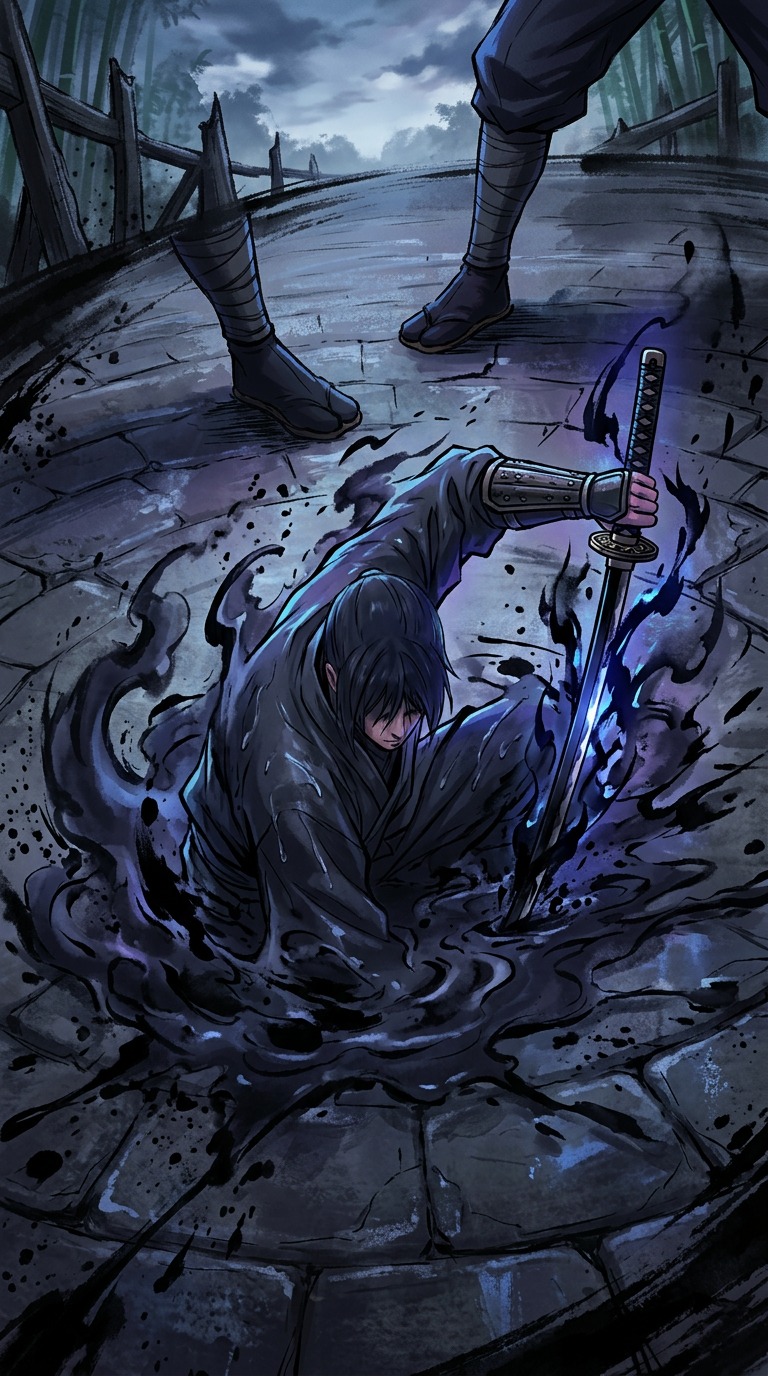
Hanzo's calculation took one second. He had documented it later in his mission report, which reads, in full, on this point: "Forty new shadows. All exactly the same geometry. Manufactured. Real shadows vary — distance from light source, surface angle, caster's weight distribution, the subtle asymmetries of organic form. These were perfect. Identical. Every one of them sharing the same geometry as the real one I had already identified before the technique activated." He had found the real shadow before the technique deployed. He had found it in the first thirty seconds of the match, during the walkout performance, while the crowd was laughing. He had not been watching Izumo. He had been watching the shadows.
Submerge Step. He was on the arena floor. Then he was beside Izumo. Not between the floor and beside — not crossing, not covering ground, not arriving in any way that the eye could trace as motion. One moment he had a position. The next moment he had a different position, without anything connecting the two moments. Izumo's four forms were still mid-performance when Hanzo was already in the geometry of completion.
Izumo's surprise was not performance. The crowd knew the difference immediately, because they had been watching performance all evening, and performance has the slight shaping that comes from knowing you are being seen. What crossed Izumo's face in that fraction of a second was not shaped for anyone. It was too sudden and too complete and too deeply un-theatrical. The Thousand Faces — who had never in a competitive match been genuinely surprised — had just been genuinely surprised.
The severed shadow looked like a photograph peeled from its backing. Izumo's shadow separated from his feet with a clean, quiet sound — not violent, not dramatic, just final, like an agreement terminating — and lay flat and still and separate, no longer connected to the shinobi that had cast it. Izumo, shadowless, in the middle of the platform, was suddenly very small. Not because he had shrunk. Because without the shadow he was only himself — one shinobi, one position, one face that was genuinely his — and one real thing is smaller than forty manufactured possibilities.
He looked up at Hanzo. And the look on his face was not the look of someone who had lost. It was the look of someone who had been understood. There is a difference, and it is not a comfortable one. The judges ruled. Hanzo had already returned to the northern position. He had not watched the shadow separate. He was already somewhere else, attending to the next thing.
Round One — Match Five: Yorinobu vs. Tsuchigumo
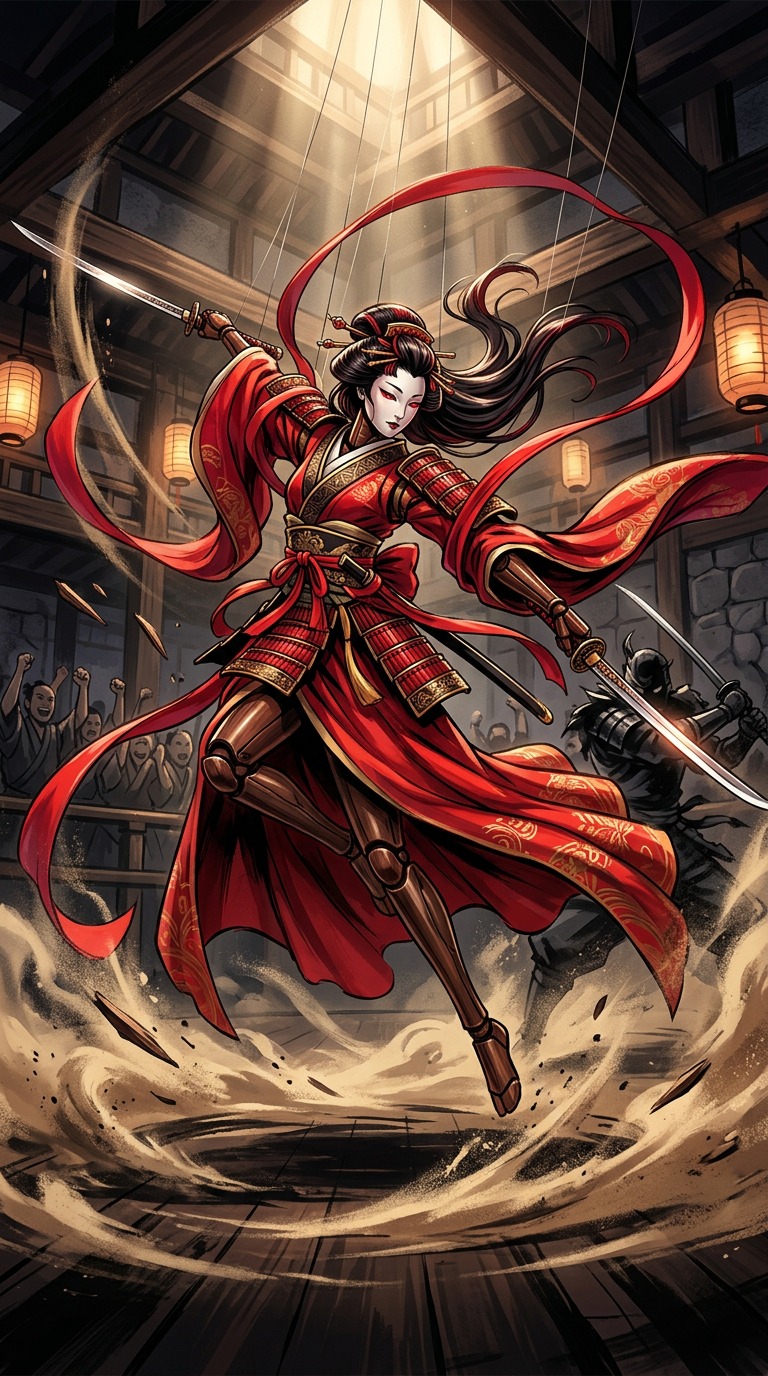
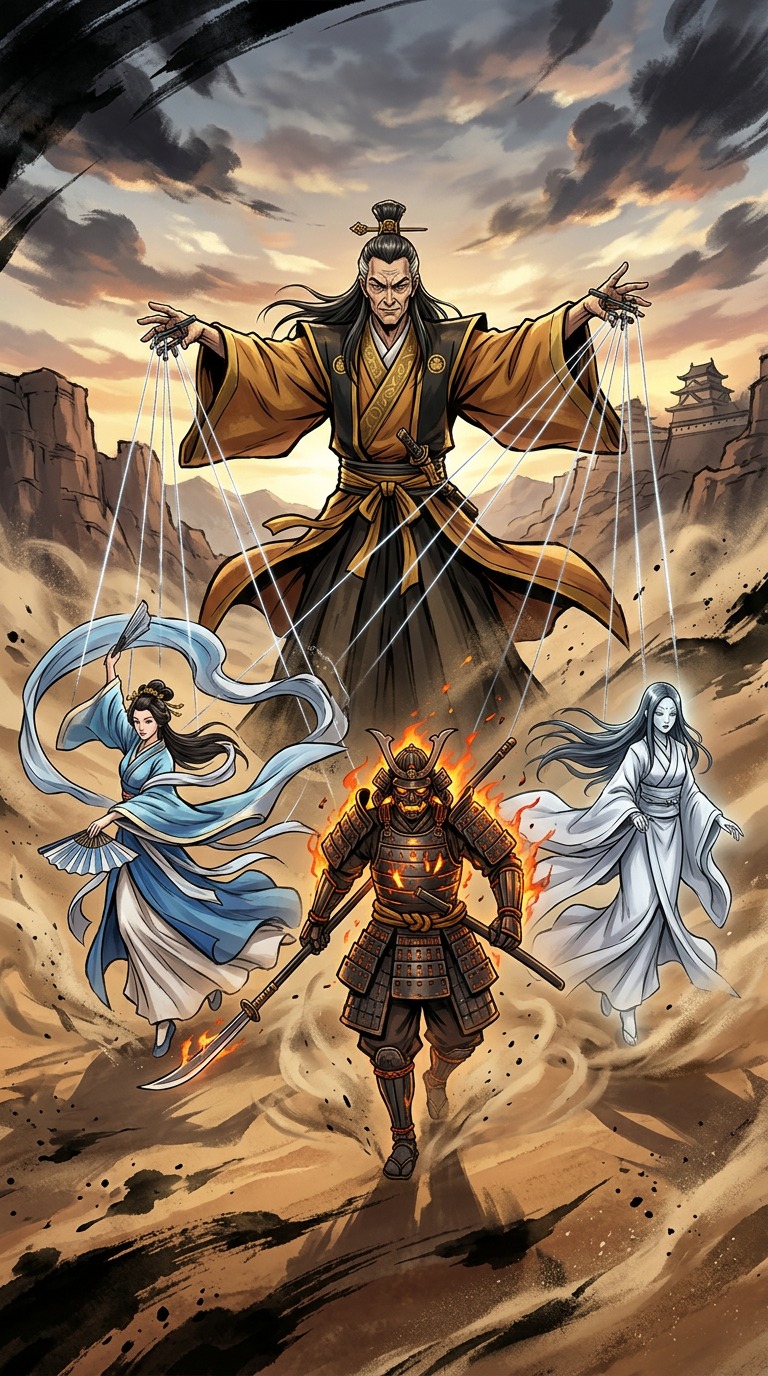
"Yorinobu — started at age seven, given puppet tools as a consolation for an illness. He took the consolation and built it into the most precise indirect combat system in the circuit. Controls three puppets simultaneously. Has not lost a team-format match in eighteen years."
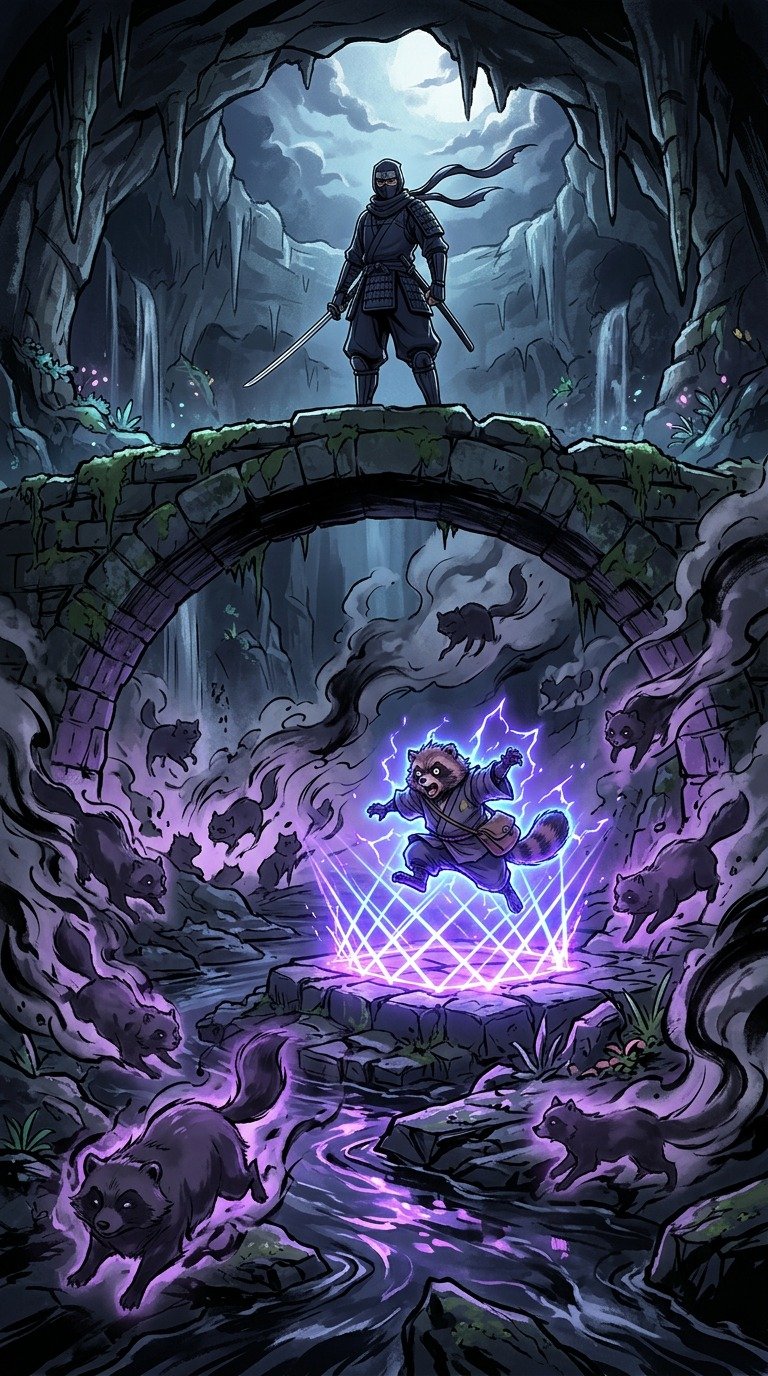
"Tsuchigumo — has been building her web in this arena for three months before anyone else arrived. Every surface mapped, every gap connected. She did not build a home here. She built an instrument."
"A web that does not move — against strings that never stop. Who controls the battlefield: the one who built it first, or the one who never stops rebuilding it?"
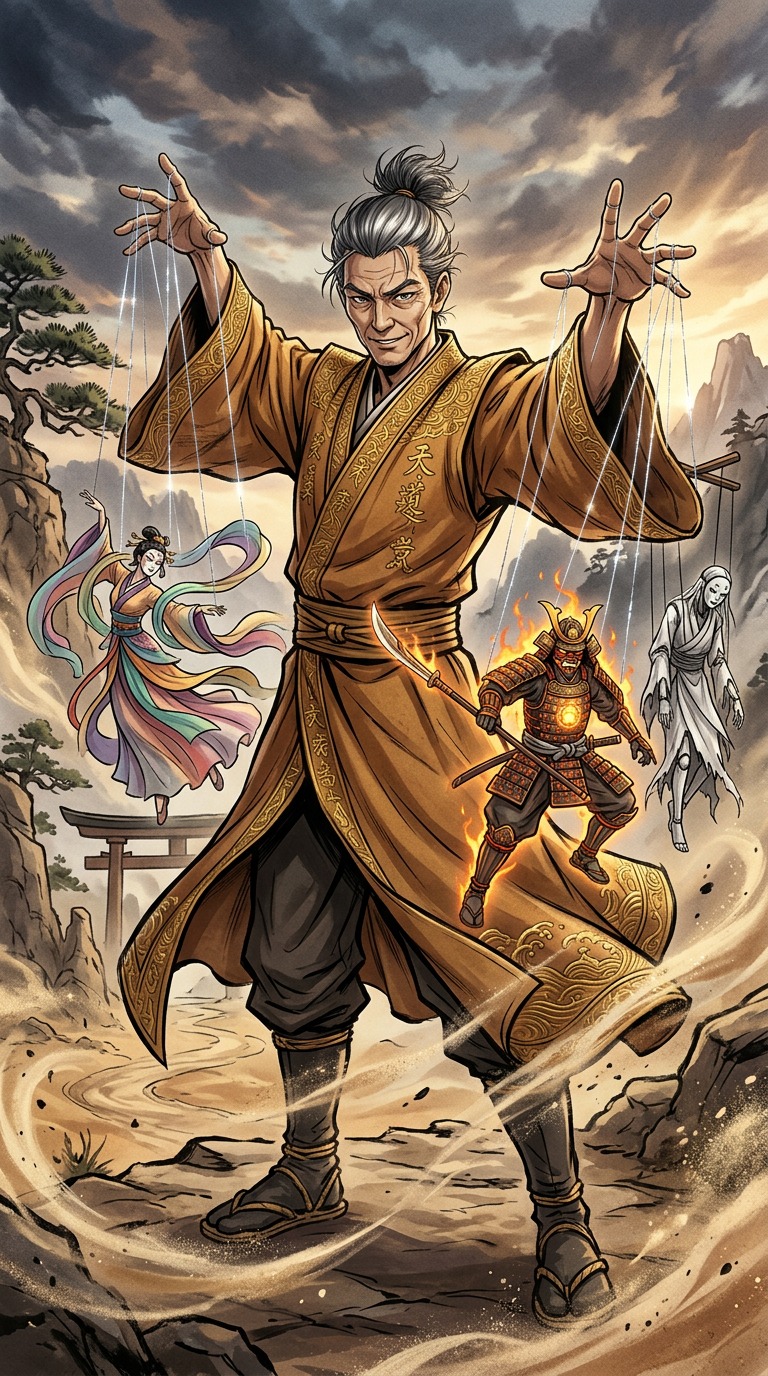
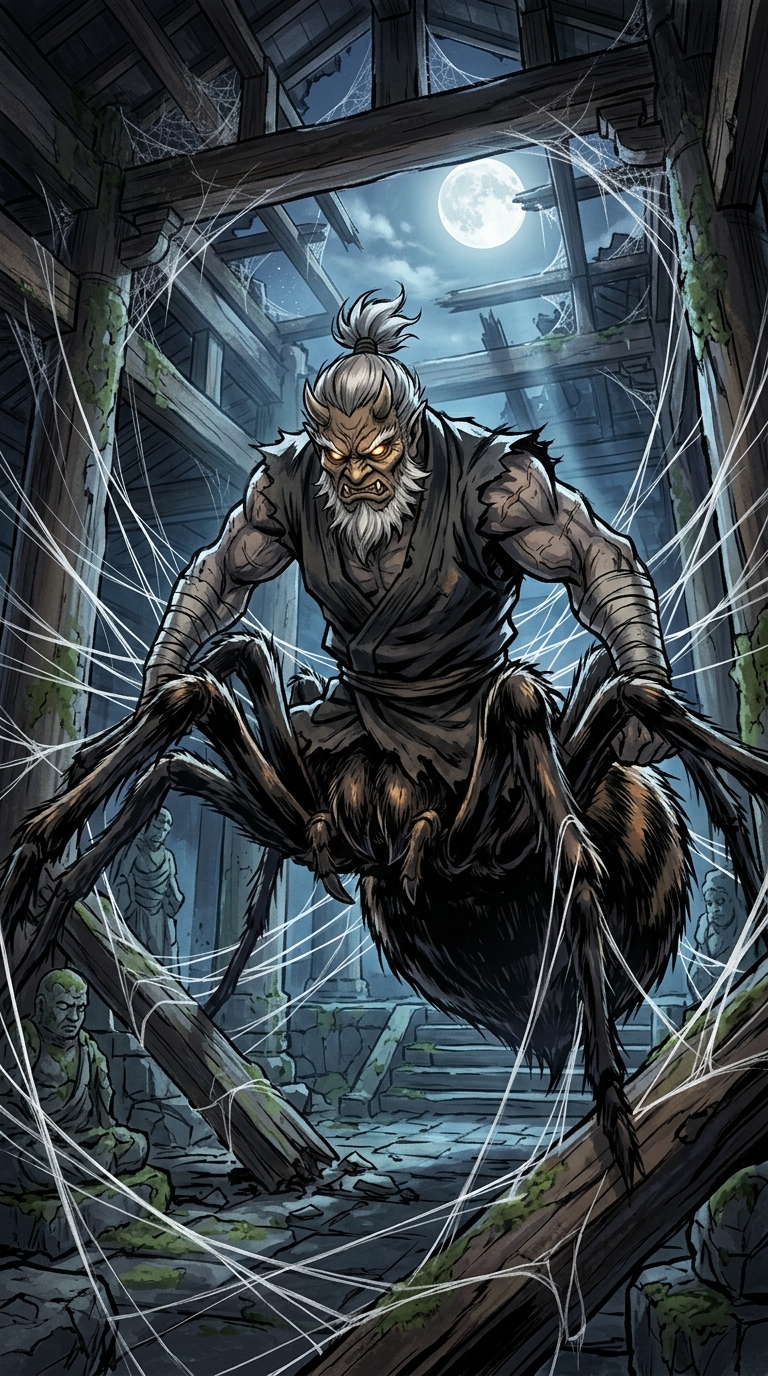
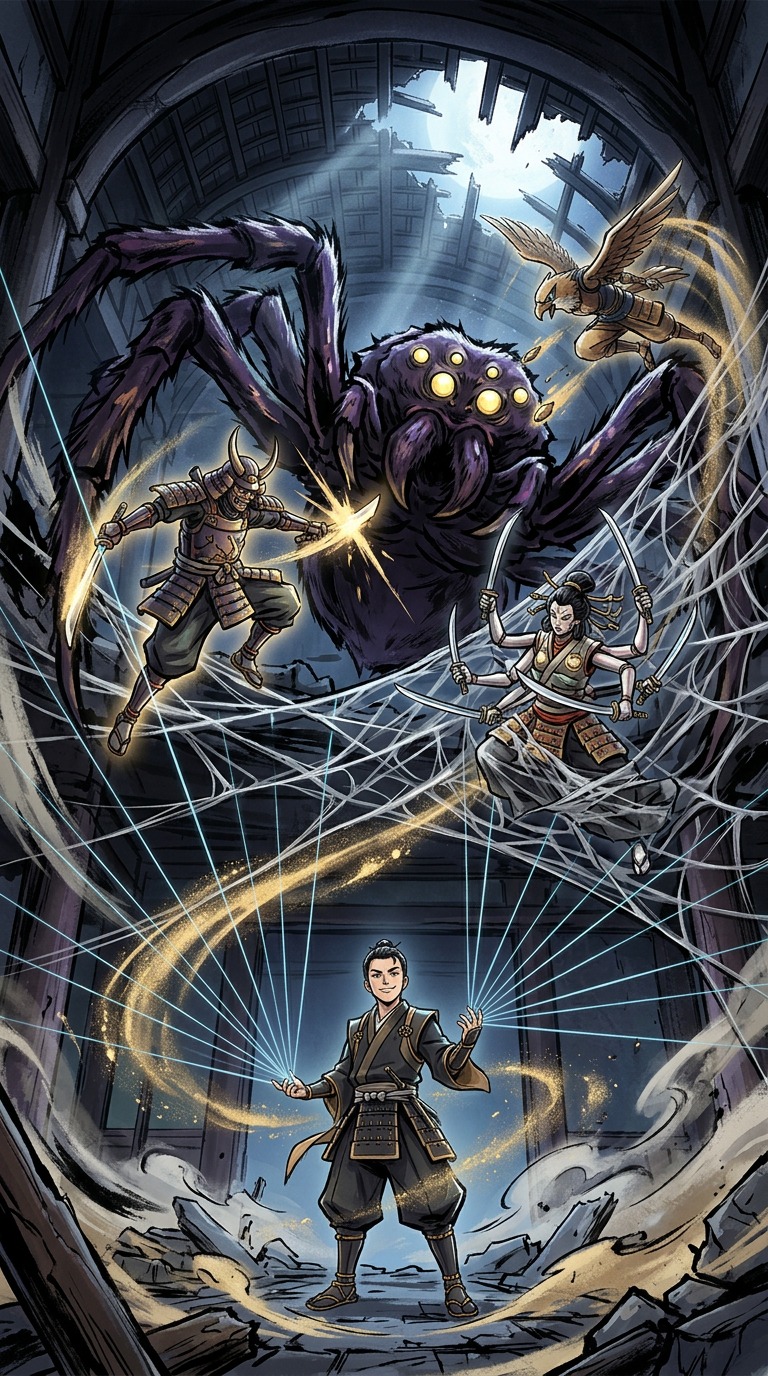
Tsuchigumo opened with Silken Snare — a geometric pattern designed to entangle legs, swords, and the threads of puppeteers. The Eclipse-Born Marionette anticipated it with its 0.3-second read and pivoted. The Hell-Carved Construct took the web full-on and stopped. But the Red Lady used the web as a surface — she ran along the silk strands, treating Tsuchigumo's trap as a stage.
Yorinobu activated Sand Mirage-Born — flooding the web with seventeen copies of the dancing puppet. Under cover, the real Red Lady advanced. Tsuchigumo responded with Rootbind Curse. The Red Lady stopped. Yorinobu aimed Threads of Renewal at the trapped Hell-Carved Construct — it broke free with renewed energy.
She fired at the Eclipse-Born Marionette's last known position. The Marionette had not been there for three seconds. It had been behind her.
Yorinobu activated Tomb of Shifting Grains — burying the web anchor points. The entire Silken Snare formation lost cohesion. Three puppets advanced simultaneously. He activated Threads of the Thousandfold Realm — severing the connection between Tsuchigumo's webs and her intention. The webs that left her hands fell slack before they reached anything.
"Three months. I thought about what you said for three months." / "I know. It made you careful. Careful things are easier to predict than wild ones." / "And if I'd stayed wild?" / "Then I would have had to work harder," he said, and it sounded like genuine respect.
Round One — Match Six: The Abyss-Winged Sovereign vs. Raiko
"Raikō — thirty-one victories, defeated five dragons, his offensive output classified as the theoretical ceiling of mortal combat power. He has faced six dragons. He is going to face a seventh. Except it isn't a dragon."
"The Abyss-Winged Sovereign — Primordial-Class. The eastern wall was reinforced after its registration. The Sovereign did not respond to the notification. It has won two previous brackets under different names. The committee ruled: winning is winning."
"A sun — against what a sun cannot fill. Not a question of power. A question of the shape of what power cannot reach."
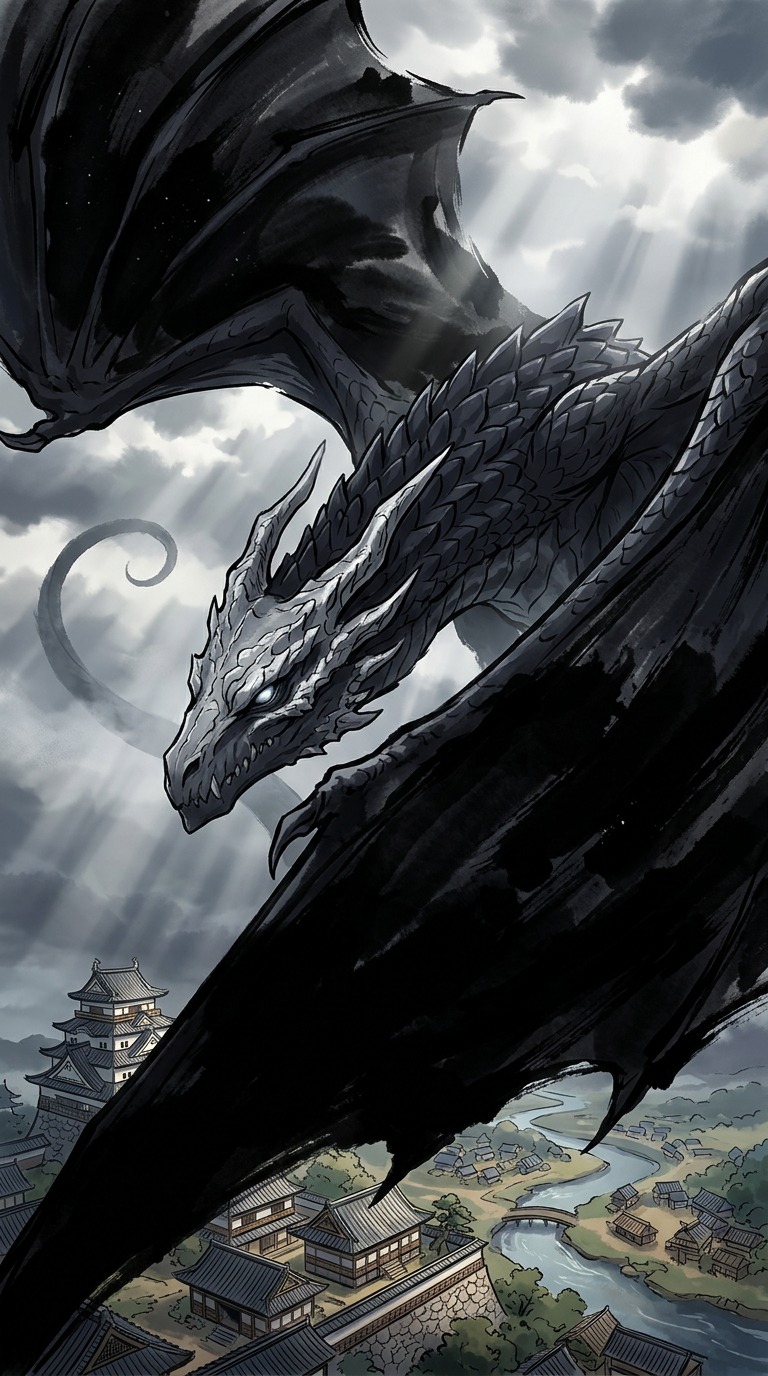
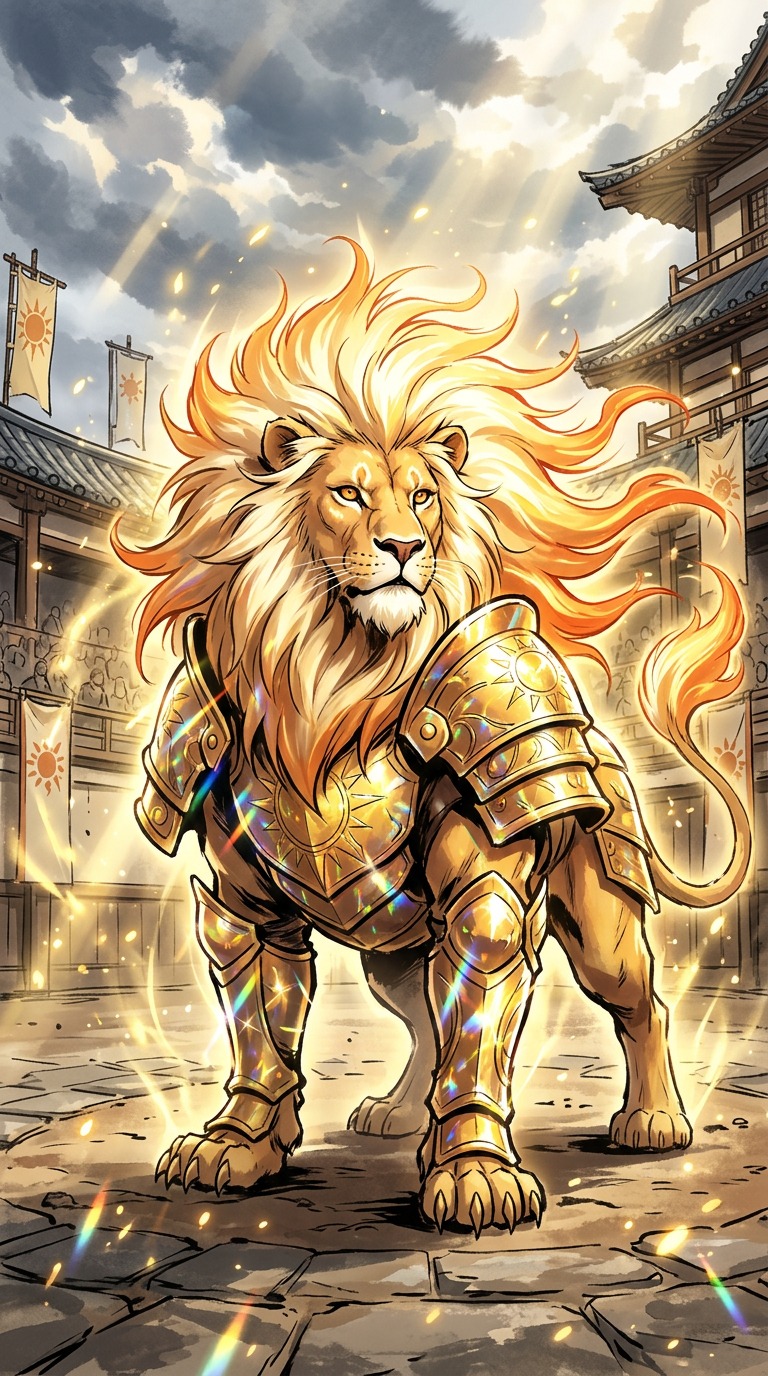
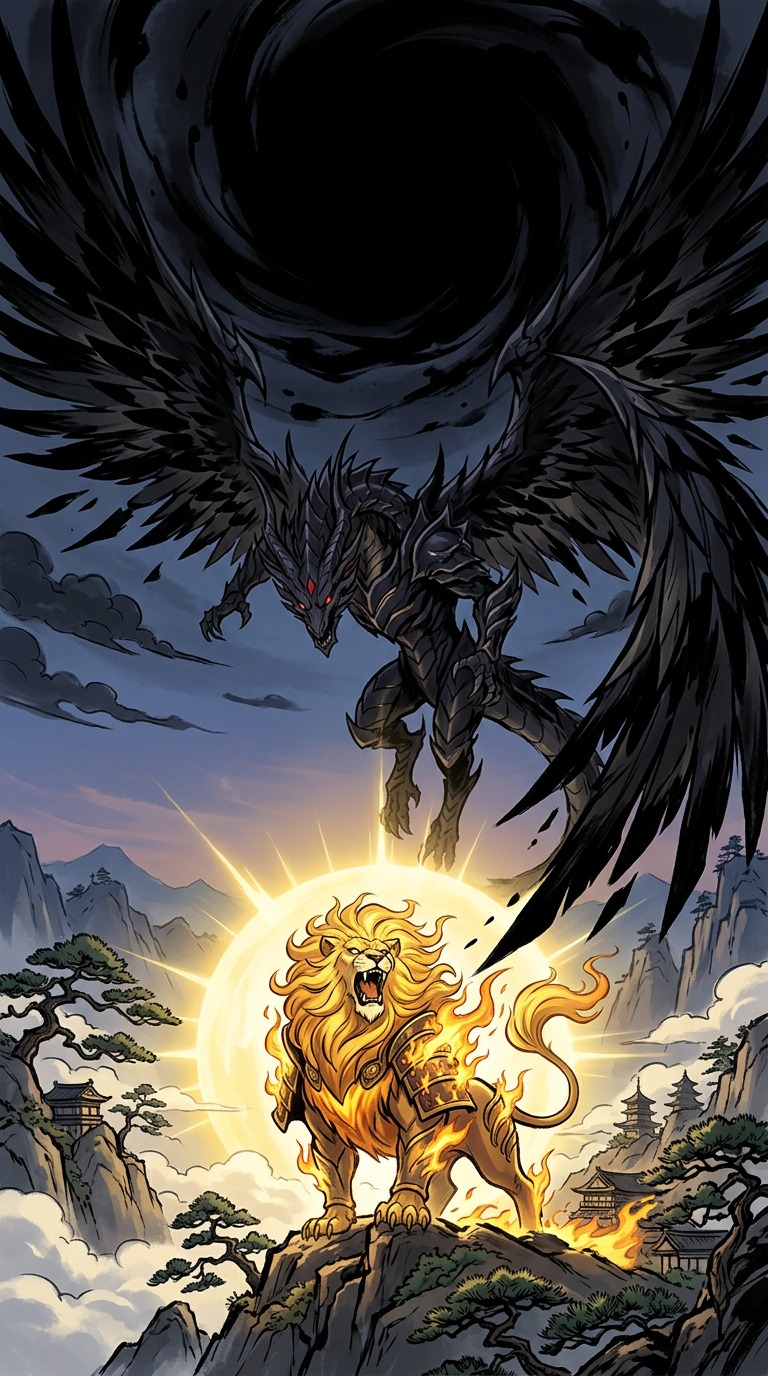
Raikō opened with Fireball Ninjitsu at maximum range. Against five previous dragons, the light had disoriented them. The Abyss-Winged Sovereign flew through the fireball without altering its course. Not dodging. Not shielding. Simply flying through it as if the fireball were a passing thought.
Raikō activated Rage Unbound — real hits, physical impacts, claws against the Sovereign's flank. The Sovereign absorbed them. Not endured. Absorbed. The impacts disappeared into its body the way sound disappears into a cloth room. He activated Flame of the Wandering Soul — blue-white soul fire that burns spiritual energy. The Sovereign's wing came down. Not an attack — a covering. The arena fell into darkness so complete that Raikō's fire became the only visible thing in the space. And then the fire was visible from outside the darkness. And Raikō was not.
The darkness retreated. Raikō stood — physically still capable. But something had changed in his eyes. He had hit this thing six times with his most sincere attacks and it had felt nothing. The Sovereign opened its mouth and from it came something that was not a sound — a frequency that removed the will to damage back.
Raikō's spirit armor held. His will to use it did not. The match ended by judges' ruling — not a defeat of the body but a defeat of the forward motion that defined his entire existence. I still believe, he thought. I just know now it's not always enough.
Round One — Match Seven: Nobunaga vs. Hōka
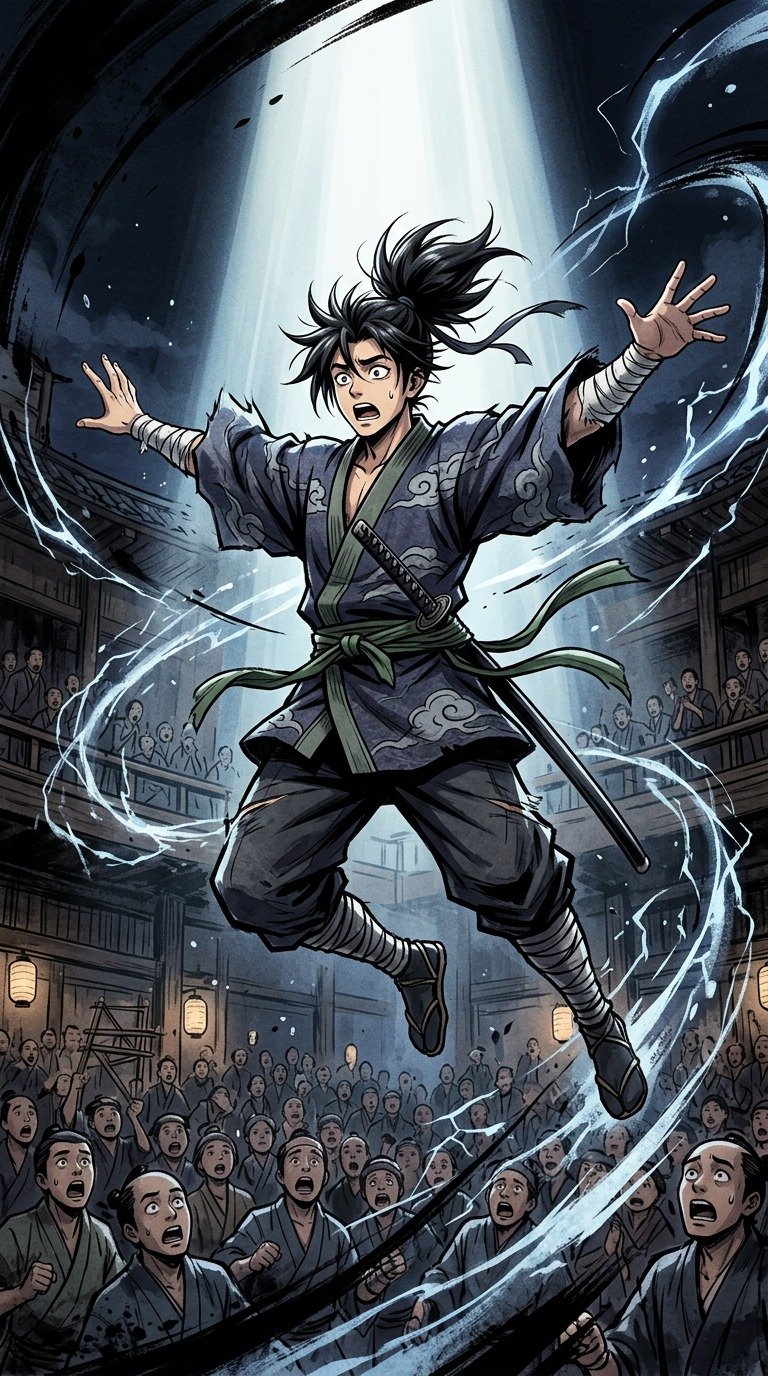
"Matsudaira Nobunaga — forty-three campaigns, zero defeats, certain since age twelve. He refused seventeen match invitations from this bracket alone for being unworthy. He has not been wrong in forty years. He believes this tournament will test that. He is right."
"Hōka — eleven documented identities, sixty internalized tactical systems, three months spent specifically becoming Nobunaga. She can fight as him, sequence as him, think as him. The only question: does she know who she is when she stops?"
"Identity as bedrock — against identity as instrument. The man who has never been wrong. Against the woman who has never needed to be herself."
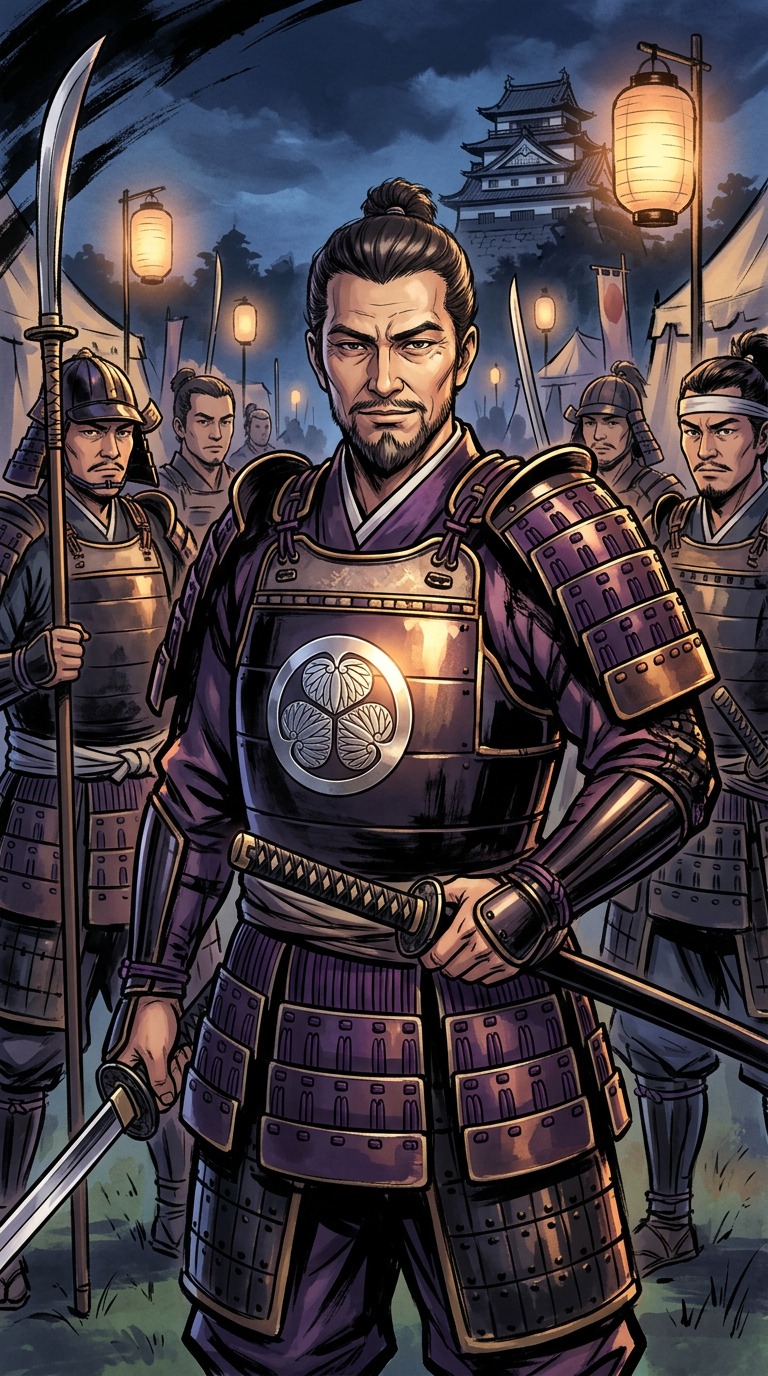
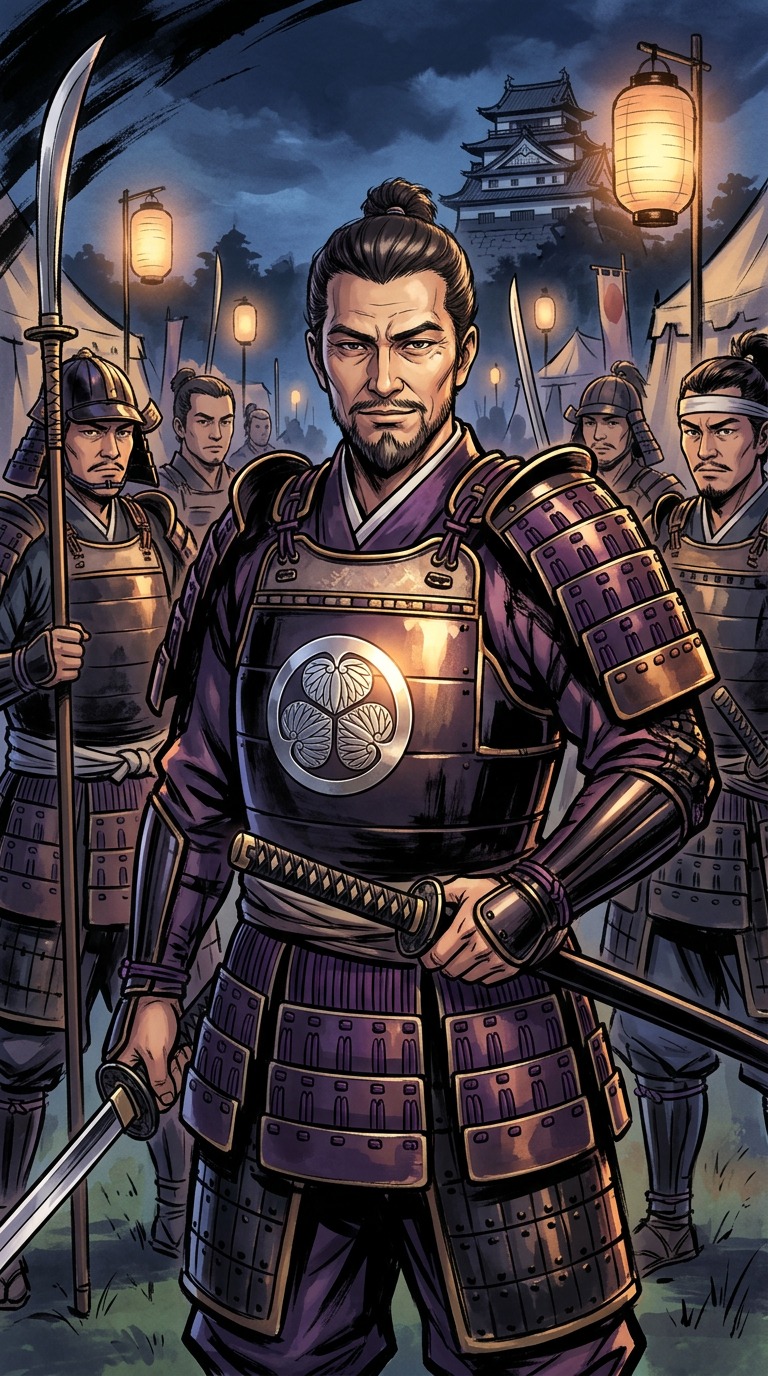
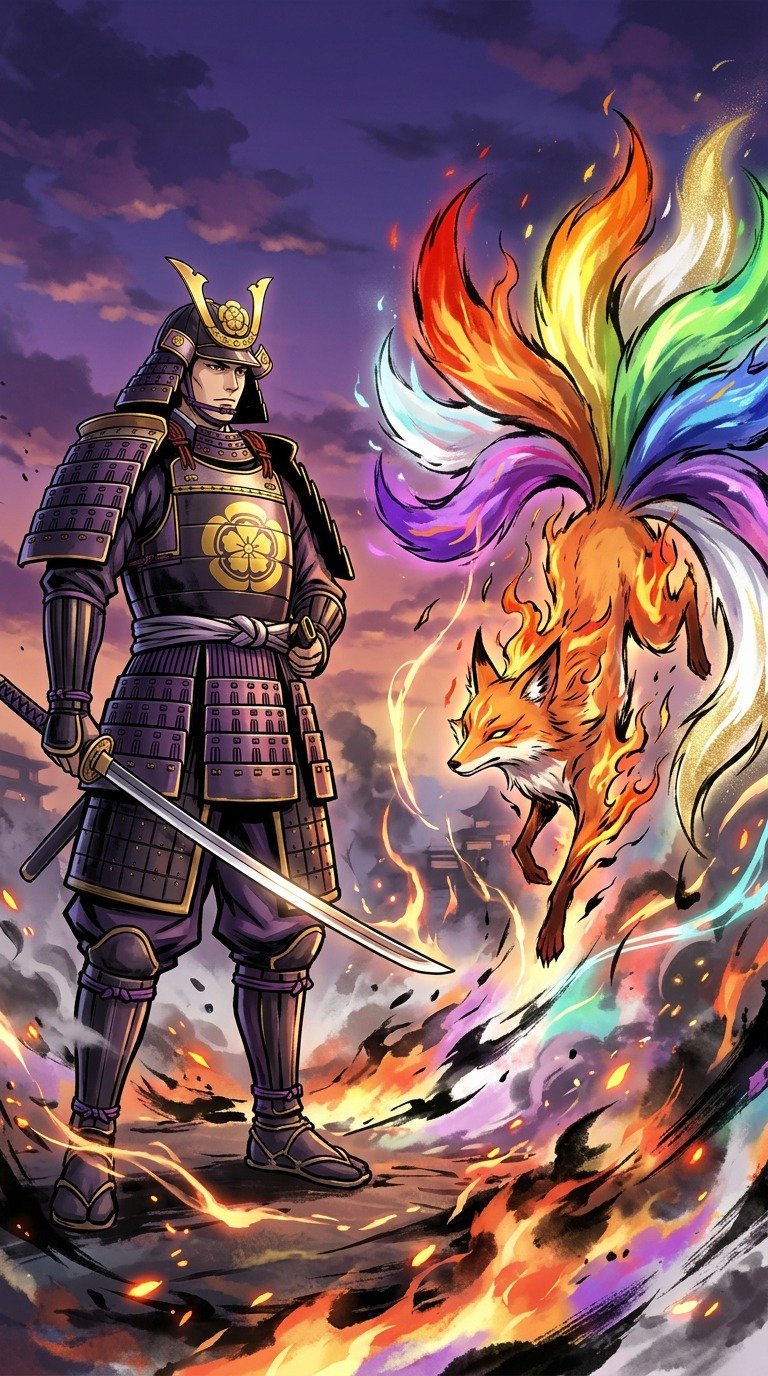
She activated first — casting Clairvoyant Sight to read his hand. She saw Ten-Phantasm Rift Blade loaded. She had expected it. She became him. For thirty-seven seconds, Hōka fought using Matsudaira's own tactical logic — positioned as he would position, used resources in his sequence. He paused. Something happened behind his eyes that was not common to him: confusion. "You play my style well." / "I've been practicing for three months." / "Yes. But you're playing it because you're afraid."
She paused in the middle of a flanking maneuver. That was a mistake. He activated Ten-Phantasm Rift Blade — ten phantom sword projections. She was in five of those positions simultaneously. She took significant damage. She tried thirty-seven adaptations, seventeen styles. He had a response for all of them — he'd studied every style she'd ever used in recorded matches.
She stopped adapting. She looked at him. "Who are you," he asked, "when you're not being someone else?"
She did not have a confident answer. "That," he said, not unkindly, "is why you haven't been able to hit me."
Round One — Match Eight: Ren vs. the Leviathan
Fangs Echo waited until the arena was completely still before speaking.
"Ren — of the Hana-za Traveling Theater Company. Twenty-seven plays in repertoire. Six weeks ago, by every witness account, he should not still be standing. He is not a warrior by training. He is something less classifiable, and I think more honest."
"His opponent — Primordial-Class. Singing since before any of us existed. Three scholars transcribed its song. All three retired from academic work afterward — not because it was painful, but because after hearing it, they felt they had already heard everything. The Leviathan."
"In two hundred years, this is the first match I do not have a file for. I hope you feel the weight of that. Watch."
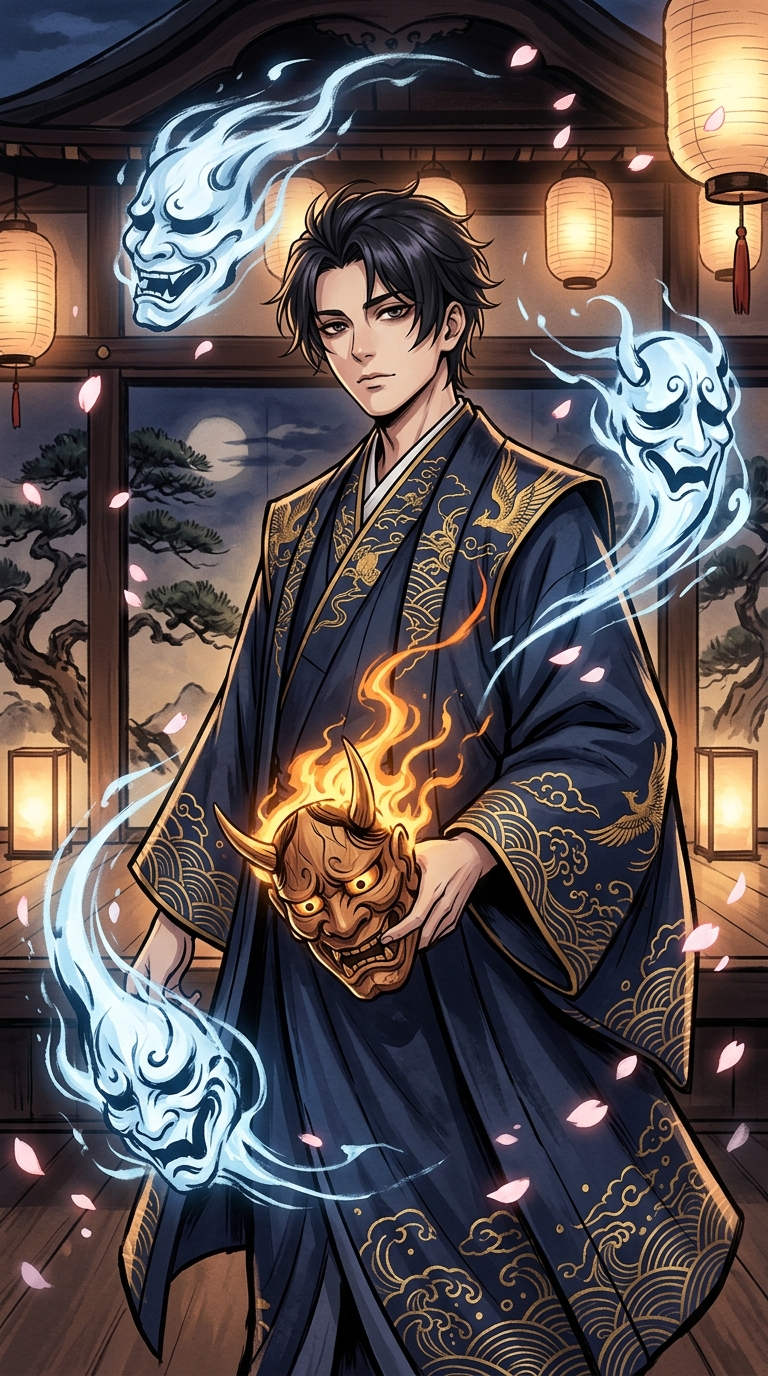
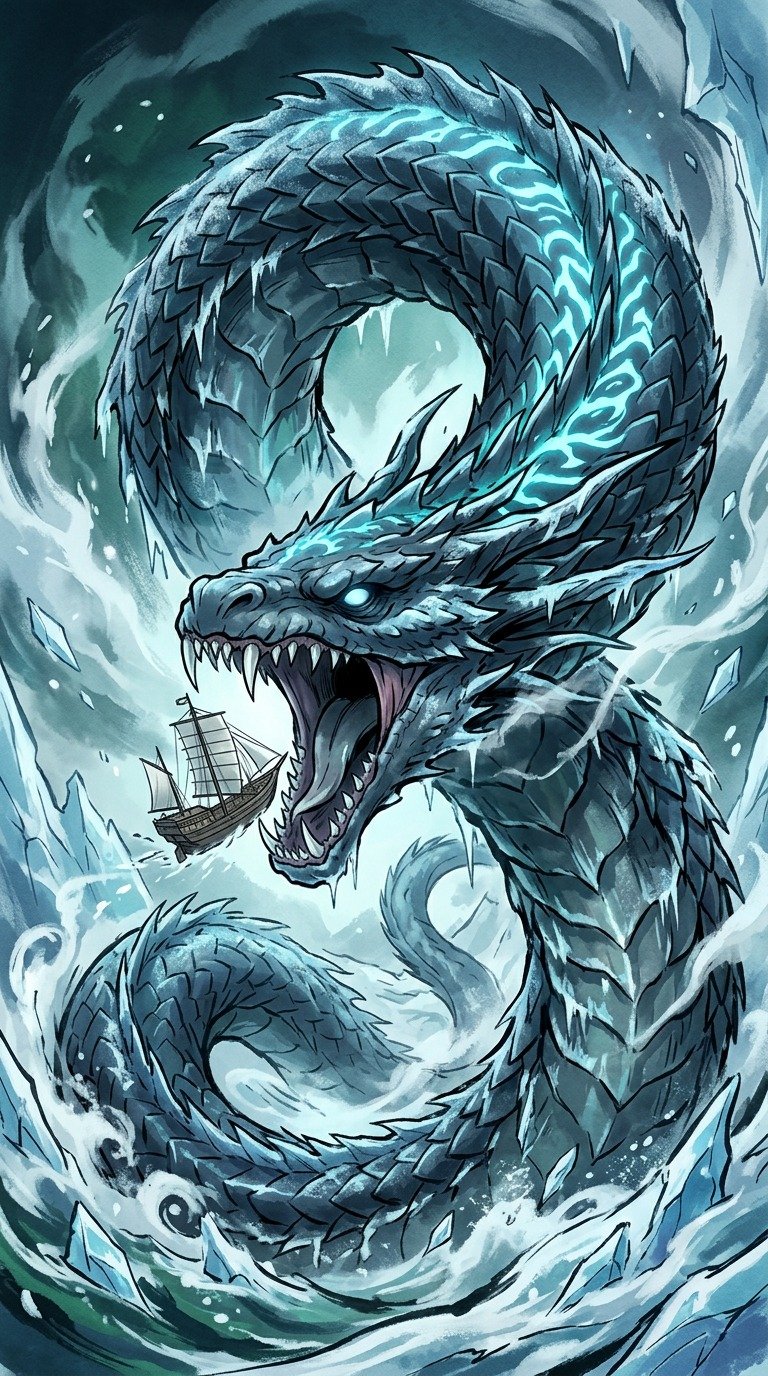
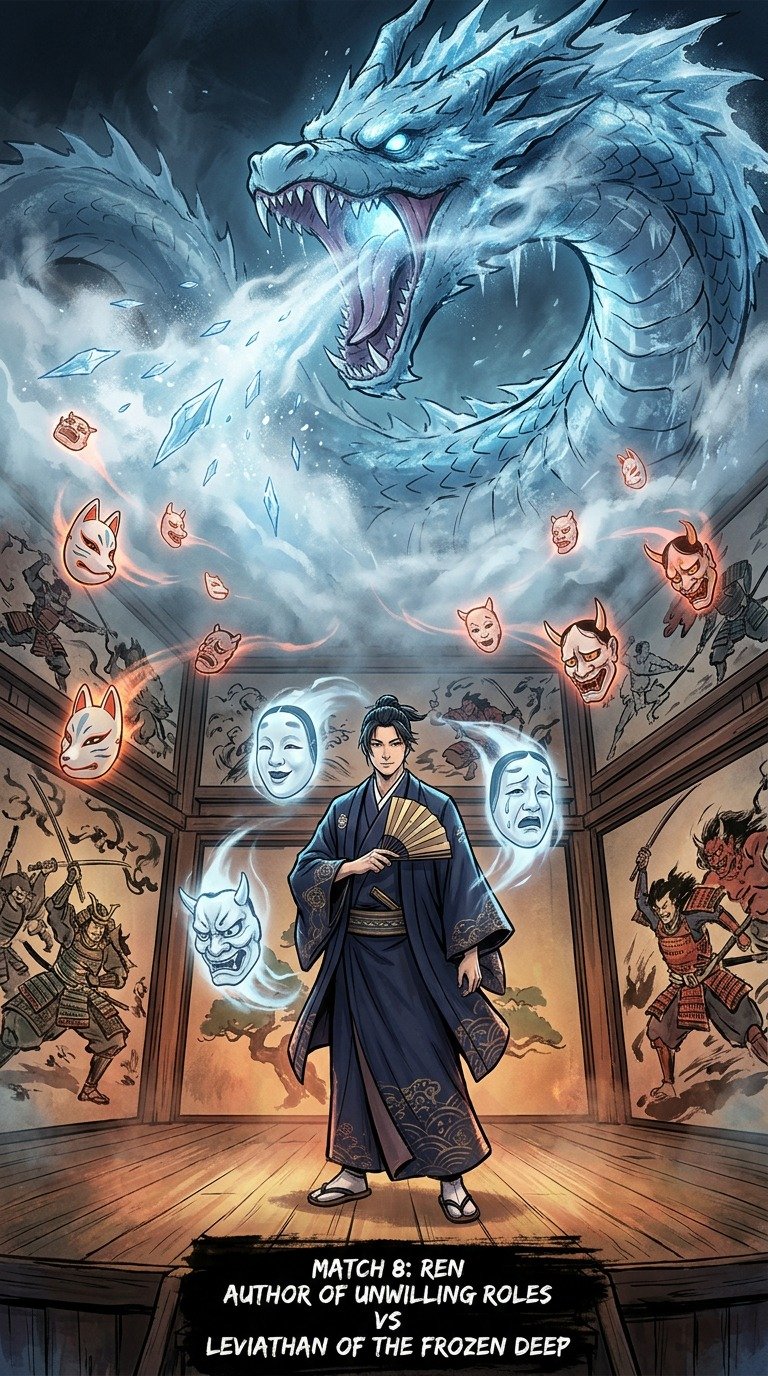
The song deepened immediately. Ren stood in it. He did something almost no one in the crowd could identify: he listened to the song. Not to fight it. To hear its structure. It has no roles. No fear, no pride, no love, no grief. It has continuity and cold and depth and song. But it is here. And here is a stage. And on a stage, everything has a role whether it knows it or not.
He activated Hall of Painted Truths — the Hana-za's sacred theater location. The arena became, at its edges, a theater. The lanterns became stage lights. He placed the Hannya mask in the air before him. Three ghost-masks moved toward the Leviathan — not attacking, but assigning. The first mask carried the role from Aoi no Ue — the Noh play of the spirit that expands until its vessel cannot contain it. He activated Kabuki Death-Art Act 1. The Leviathan had entered the first arc of a story with a prescribed end.
The Leviathan sent its song directly at Ren — a concentrated beam of frequency that should have erased his will entirely. His Mask-Bearer absorbed the first wave. The mask shattered. One of his three auras went dark. Ren cast Ink: Tiger Attack — interrupting the song's concentration for two seconds. He activated Kabuki Death-Art Act 2.
But Ren did not activate Act 3 immediately. He looked at the Leviathan. You've been here since before my first play. You'll be here after my last one. And none of it matters to you. But I'm still here. And while I'm here, the stage is mine.
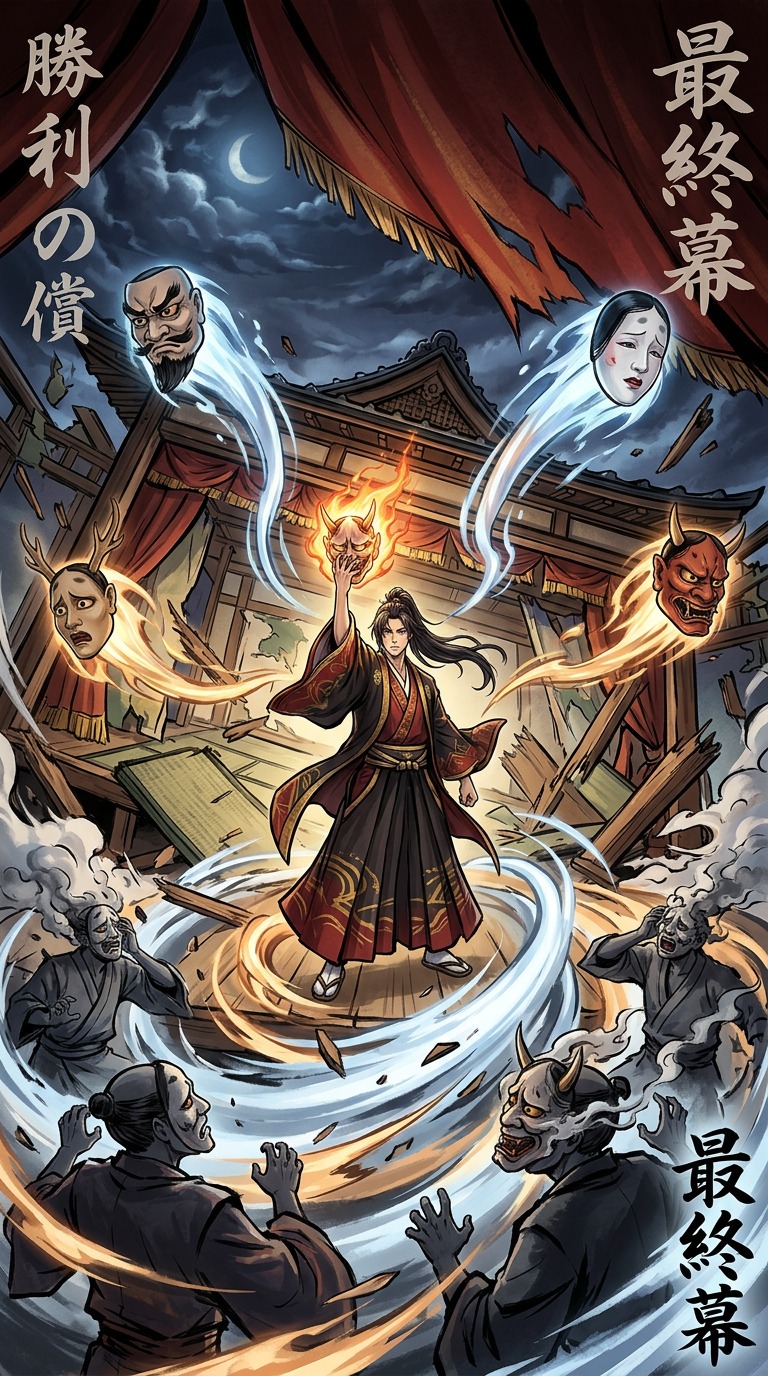
He activated Final Acts of Death — his Shōri no Daishō. The conditions were met. The stage collapsed. Not destroyed — completed. The spirit from Aoi no Ue, having expanded too far, was exorcised. The plague of Act 2 burned clean. The story reached its final page. The Leviathan's song stopped. Not silenced — finished. The way a piece of music finishes. Complete.
Ren stood in the silence. The Hall of Painted Truths faded. He picked up the Hannya mask and hung it at his hip. He walked toward the exit without taking a bow. He never took a bow.
"There are certain matches you watch not to learn how to fight but to remember why it matters. This was one of those."
The crowd had not left. It was past midnight. The eight round one matches had taken five hours. Nobody left.
Fangs Echo looked at the arena floor one final time before descending. "Eight remain."
"Eight fighters remain: Commander Tesshin. Kaname. Zen Master. Kagekiri no Hanzo. Thread-Master Yorinobu. Abyss-Winged Sovereign. Matsudaira Nobunaga. And Ren."
"Round Two begins tomorrow at dusk."
✦ Zen Master vs. Kagekiri no Hanzo ✦
✦ Thread-Master Yorinobu vs. Abyss-Winged Sovereign ✦
✦ Matsudaira Nobunaga vs. Ren ✦
"The man who is always right — against the man who writes what happens next."
"When the Sound Wolf sings, even the mountains bow to listen. But the mountains don't always like what they hear."
"Tomorrow."
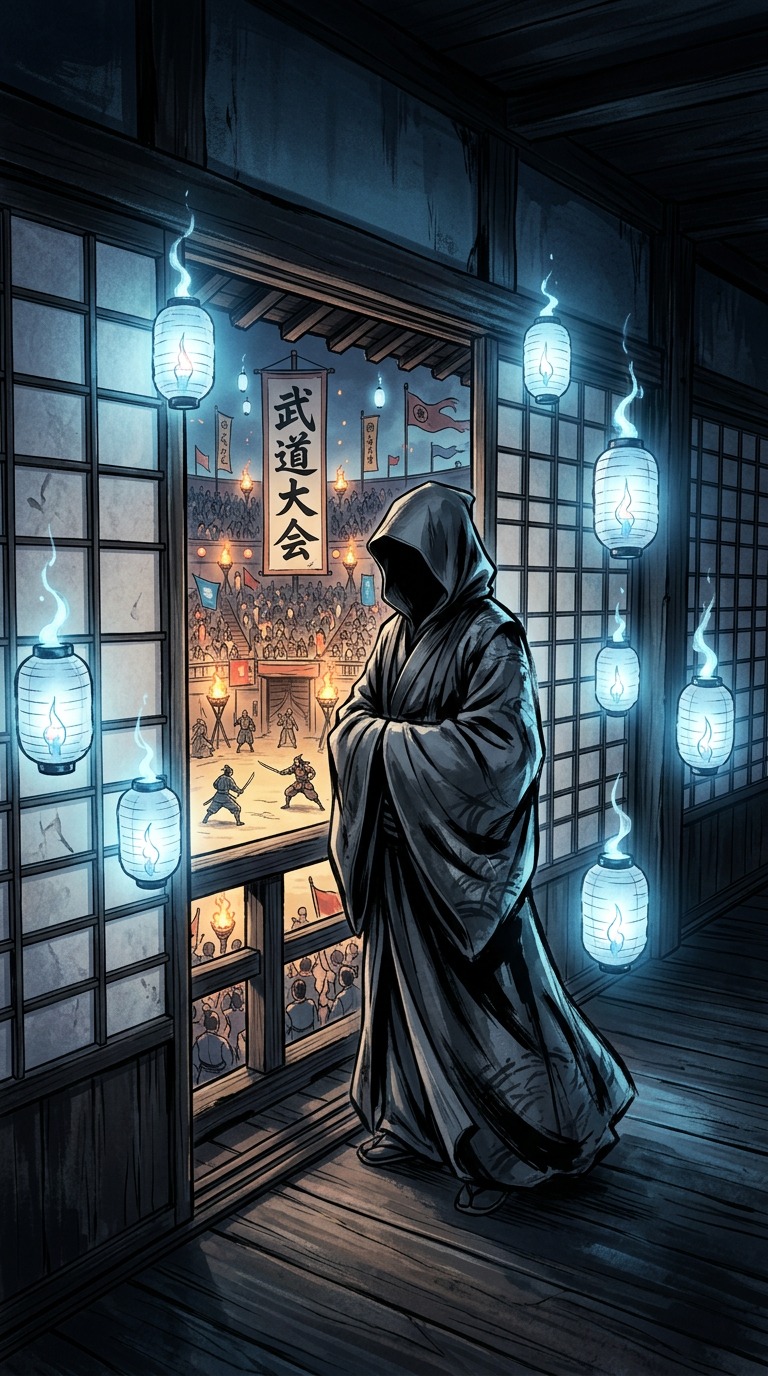
In the upper tiers, a figure in grey robes had watched every match and written nothing down. They had needed to write nothing. They remembered everything. The report they would send tonight would say, in precise language, which four of the eight remaining fighters posed the greatest threat to a certain plan that had been in motion for longer than the tournament had existed. Only three names would appear on the threat list. The fourth name would appear twice — once on the threat list, and once on a different list titled: Assets. The question of which list mattered more had not yet been resolved.
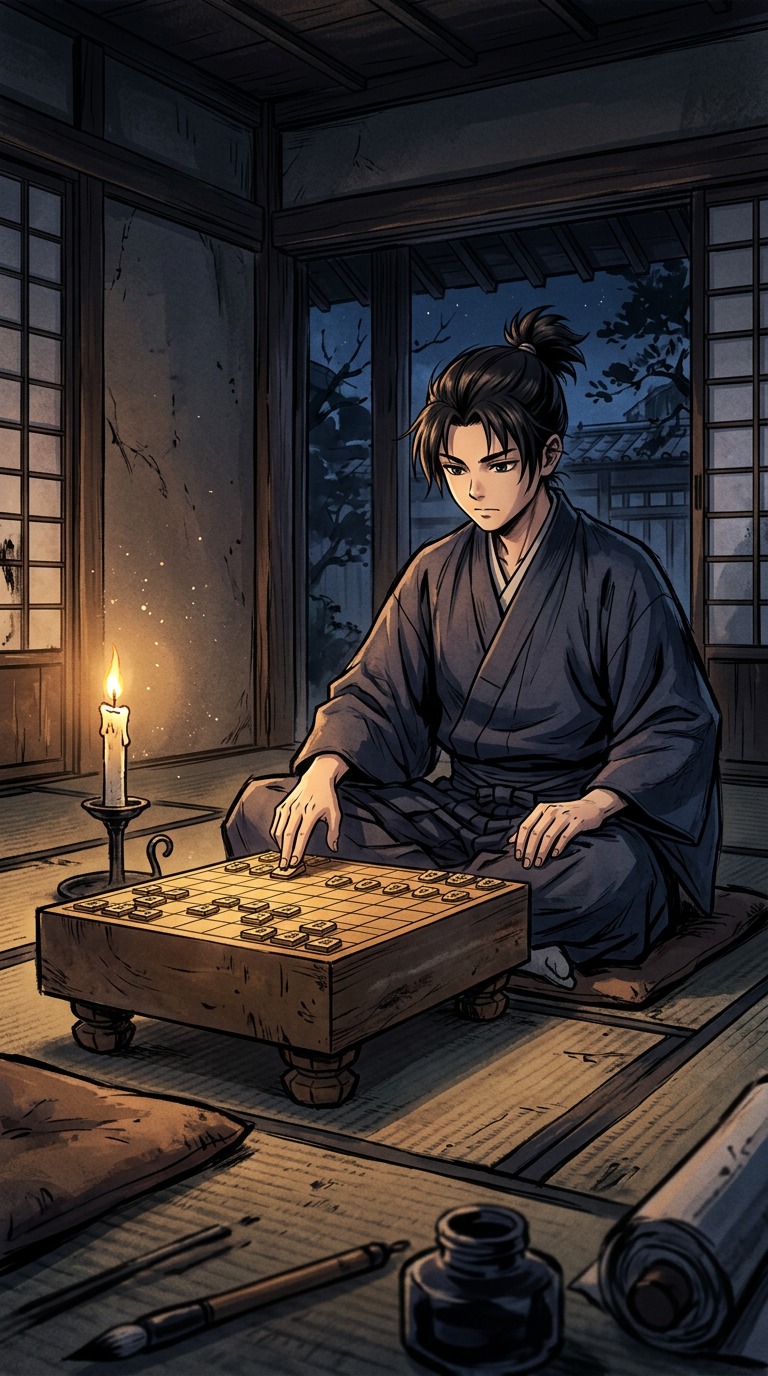
Kaname sat alone in her preparation room with a shogi board. Set to the Round Two matchup. She moved pieces. She played it forward. She played it forward again. And then, for the first time in seven years, she found a position she could not calculate her way out of.
She sat with this for a long time. Maybe the board is bigger than I thought. She moved a piece she had never moved in any version of this game before. She waited to see what happened next. For the first time in seven years, she didn't know.
Thread-Master Yorinobu went to the arena floor after the crowd had gone. He stood where Tsuchigumo had stood at the end of their match. He thought about the Abyss-Winged Sovereign. He thought about strings — his finest weapons — and what they could possibly do to something that could swallow a wing of the arena in darkness. He lifted his hands. His silver threads caught the dim light of the remaining lanterns. Show me what you're made of, he thought. Show me and I'll tell you who you truly are.
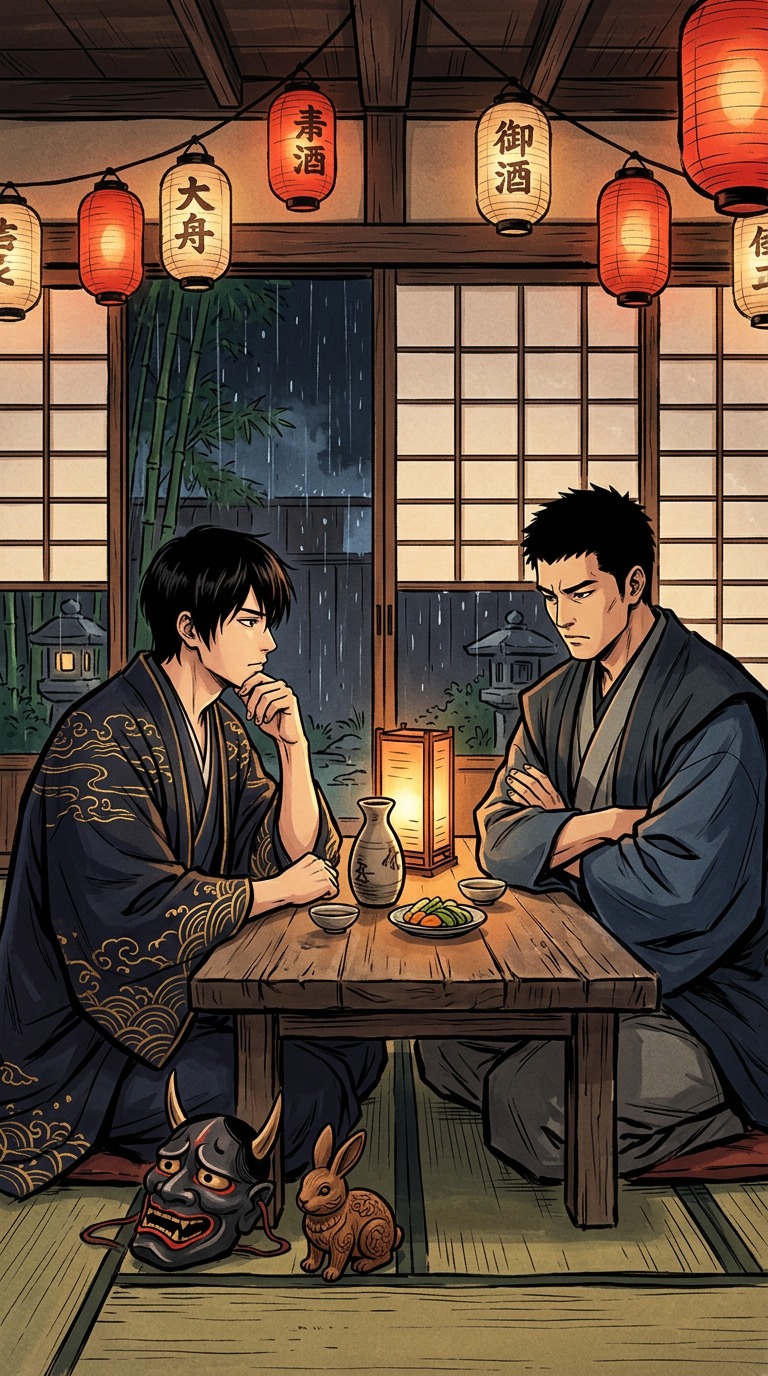
In the Hana-za Company's rooms at the tournament inn, Aratake was awake when Ren came back. He said nothing. Ren set the Hannya mask on the table. He reached into his robe and set something else next to it. A small carved rabbit. Worn at the edges. Someone else's.
"He would have liked to have seen that," Aratake said finally. / "He would have laughed at the wrong moment," Ren said. "He always did." / "Yes." / "It would have been perfect."
They sat together in the quiet that follows things that have already cost something, waiting for the morning that would eventually arrive whether they were ready for it or not. Outside, in the direction of the arena, a wolf's voice carried through the dark air. Not announcing. Not performing. Just present. Even alone, even in the dark, the mountains listened.
End of Round One.
The Tournament of Unmarked Graves continues at dusk.
Round Two: When the Bracket Becomes Personal.